A happy and healthy 2017!

As the final hours of 2016 here in the Netherlands are ticking away I wish all the readers of our blog a very happy and healthy 2017!

2017 will be a very important year for the people of the Netherlands and Indonesia.

In the Netherlands people feel more and more the (financial) stress of the situation from the unstable economic situation within the European Union and with the Euro. There are many uncertainties around the influx of immigrants from Syria and other Arabic and African countries that could lead to tensions with the Dutch citizens when it comes to social matters (like housing) and cultural differences. In March we will have elections in The Netherlands and I have recently become involved with a new and fresh political party so this promises to be a new and busy experience for me!

In Indonesia I feel worried about what I read in the press about the events concerning the Jakarte governor Mr. Ahok. It would be a very sad situation if religious circumstances would challenge the stability of Indonesia. Religion should not be a reason to silence opinions from individuals or groups in a society. I hope for 2017 that the situation in Indonesia stabilizes and the different religious groups can return to live peacefully and practice their religion with respect to the each other.

Nootdorp, 31 december 2016

The significance of music

Why does music play such a significant role in our lives? Do we know anyone who does not like music to some extent?

As humans we are blessed with the gift of creating, performing and passively enjoying music and are the only creatures on this planet who have all these capacities. As long as man inhabits this world he creates music. Through scientific research we know that music is a powerful tool in the development of a child’s brain and the brain in general. Music is an important means to identify you as a human, especially when you are in adolescent age. Music can play an important role to determine the social group you want to belong to or to be part of.

Music can give us consolation remembering experiences from the past, our beloved ones or special occasions in our lives. Music can make us relax or arouses us and lift up our spirits. Music brings us together and music makes us dance. Mathematicians have dealt with music because music and sound are bound to the laws of nature and therefor is a grateful subject for mathematicians since the days of the Greek and Roman physicians in Antiquity.

For musicians music can be a means to seek popularity. Or even look for a larger than life perspective, especially since mankind discovered ways to annotate and record music. So music could be reproduced for future performances which could take place long after its creator had deceased. Yet music is -like all forms of art- vulnerable and each generation creates its own music hoping it will stay relevant. Those chances are unfortunately minimal: we only have to look back at our own history to know that music recorded in the 1930s through 1980s is probably relatively unknown to most of the audience that nowadays listen to music. If we travel back further in time we find that only a handful of the compositions of composers from the Middle Ages and Modern Age are still being performed and listened to in our time (think Bach, Mozart, Beethoven and the likes). Music created before that time is practically lost to us, although there are a few exceptions.

When the industrial and scientific revolution in Europe boomed at the end of the 18th century it also had a profound impact on composers, musicians and the way the listener experience music. Composers of music no longer needed to make their income from physical performances but could arrange their compositions for sheet music. Musicians could buy this sheet music and perform the music without ever having heard the original from the composer. Early on in the 20th century new possibilities became available that even would take the reproduction music to a new level. Music could now be recorded and reproduced. First through the use of mechanical reproduction, then vinyl and finally through digital media like the CD and in our current era through the use of streaming media.

On a personal level I always had a great interest in sound and music, an interest that went beyond that of the average interested musician or listener. As a young person I mastered different instruments like flute, piano and guitar. Meanwhile I discovered I found it more interesting to record the results of music making than to play music together with other musicians or to perform live. Over the years I always felt intrigued and inspired by how instruments sound, from the most simple percussion instruments to complex electronic instrumenujts (and everything in between). Some of my favorite sounding instruments are: gamelan, dulcimerpipe organcelestaMoog synthesizer.

So I developed an interest in creating and recording music. Composing and recording music is a strange process. It is difficult to express how and why ideas emerge and why some ideas grow into a composition and other ideas land on a shelf or are forgotten over time. I save most ideas like making a notation that come to mind. Those ideas come from playing some piano chords or noodling on a guitar, but also riding on my bike is good for inspiration. At a certain point I decide that an idea is interesting enough to invest more time into it. When the time comes to record the music it is also a bit strange process. Sometimes things fall easily into place, sometimes you can struggle for weeks to ‘get it right’. What this ‘get it right’ exactly means is difficult to express but it has something to do with reaching a point where you find your composition and recording is ‘like it should be’ and can be considered finished.

Recently I finished a new album ‘Piano and Guitar, Vol. I’. Its title meaning that I return to these instruments and rely less on electronic instruments. You can listen to my new album on Spotify.

-The Hague, 20 november 2016-

Movie Review : Deepwater Horizon

Deepwater Horizon is the movie we watched last weekend in The Hague’s Pathe Theatre. For a moment we were doubting between this movie and Inferno. Watching the Inferno trailer it looked to us like a (expensive) rehash of the DaVinci Code, so we decided to head for Deepwater Horizon.

I was not familiar with the original story of the mobile oil platform and the horrific accident in 2010. Under time pressure for rigging results, the platform would ultimately completely destroyed after some human failures with safety and testing procedures. From the trailer it looked to us like a detailed documentary style movie about how events developed until the final shocking disaster. Although the movie did try its best to put some detail in the events and circumstances, above all it remained a simple disaster movie. People make wrong decisions in the first part of the movie, things spiral out of control in the middle part and the hero (Mark Wahlberg) sacrifices his life to save what is left of the crew on the platform.

The movie starts a bit awkwardly with a family scene where the daughter of the hero-to-be explains the working of the mobile platform because she has an upcoming presentation. Of course it was meant for the movie audience to gain some understanding to the background about what will happen in the next two hours. There are many small talk conversations between the platform crew to create some intimate and sympathy with the characters that soon will be tested to the most horrible conditions. But it is all a bit too obvious to really become acquainted with the crew members and feel sympathy for their suffering to come. The part where the trouble on the platform starts and the platform disintegrates into a big ball of fire is taking too long. Although this should be the most ‘exciting’ part of the movie i felt it became quite boring after seeing one fireball after one other and collapsing structures.

All in all this movie is more about entertainment than offering you a glimpse into what really happened on board of the Deepwater Horizon. The characters are stereotypes (the bad guys from BP versus the good guys from the platform crew) and the script does carefully follow the Hollywood rules of a disaster movie. Nevertheless I enjoyed the performances of John Malkovich as the cynical guy from BP and Gina Rodriguez who played the part of a female crew member. I think the movie might have been more interesting and sticking if it did not follow the typical disaster movie scripting and would have focused more on the events as they really happened.

-Den Haag, October 25th 2016-

Two years married!

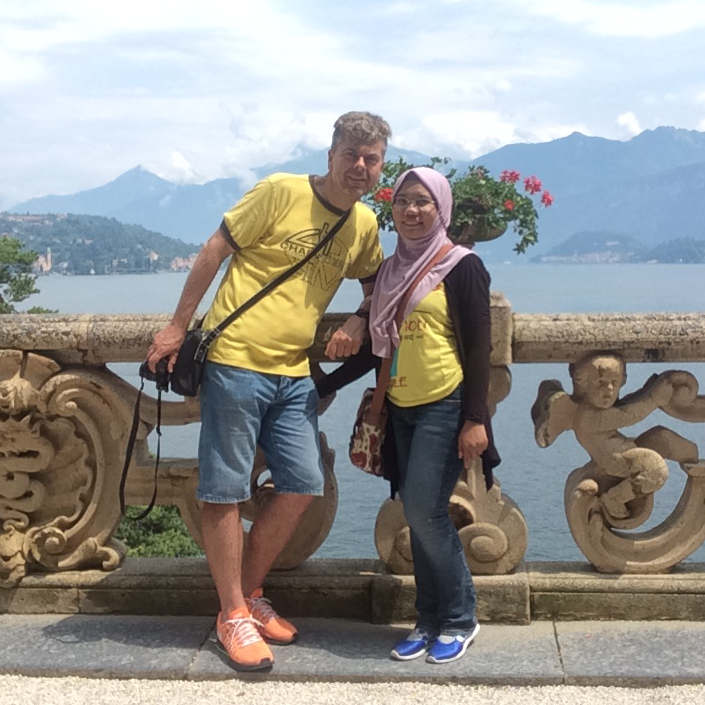
Deny Ewald were at lake como

Today marks the two year anniversary of our marriage: on August 9th 2014 we tied the knot on that beautiful day in Situbondo, East-Java. Last year it was Deny who wrote on this blog to commemorate this our first year anniversary, this year I will take the opportunity for some reflection.

First of all I feel blessed to have Deny because of her patience with me and her relentless dedication as my wife. I will never think lightly of all the steps Deny made by giving up so much from her life in Indonesia to follow me all the way to the Netherlands.

In our two year marriage, we, like any other couples, experienced so many positive things and sometimes negative things. The sum of these experiences made the bond between us stronger and we still have many things to look out for in life.

Sometimes Deny asks ‘Why don’t we meet each other earlier in life?’. And then I usually have some logical response, like ‘Be glad, we did meet each other…” Of course it would have been wonderful too meet earlier, but maybe in life we open our sensors for love and meeting when we are ultimately ready for the experience so the time we met is the perfect time.

As my late Dad once replied per mail to our congratulations for my parents marriage anniversary: ‘if it is up to us we hope you two will witness many more anniversaries to come’. Sadly for them it turned out to be their last marriage anniversary as my Dad passed away a few months later. Needless to say that Deny and I intend to celebrate many, many more anniversaries and in the meantime enjoy our time in life together…

Deny Ewald were at lake como
Deny and Ewald were at lake como, Italy

-Den Haag, 9 Agustus 2016-

Visit to Berlin (Part 1)

Berlin 1989

Today Deny is on her way to Berlin by train. In Berlin she will meet her friends and spend some days visiting Berlin’s interesting places. This gives me some time to reflect on my own journey to Berlin a long time ago, in 1989 to be precise!

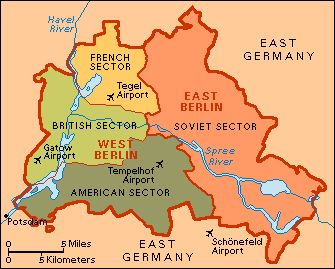
In those days the Wall was still standing, ‘Checkpoint Charlie’ was still operational and not yet a museum. Berlin was separated in a Western and Eastern part of the city, like Germany itself was divided into two countries: West Germany with Bonn as the capital city and East Germany or DDR (Deutsche Demokratische Republik) as the East Germans themselves called it) which was actually a communistic satellite state of the Soviet Union). The eastern part of Berlin was the capital of the DDR and reflected the territory of Berlin that the Soviet Union occupied during World War II.  The western part of Berlin was an enclave and knew a British, American and French sector. This picture will give you an impression of the complex situation of Berlin during that period.

Berlin after 1945
Berlin after 1945 Source: Pinterest

As you can see from this image West Berlin was fully enclosed by East Germany. For me travelling by train from the Netherlands this meant I had to cross West and East Germany before arriving and staying in West Berlin. In those days there was a hostile relationship between the two countries, comparable to the situation nowadays in Korea. This hostility was mainly due to the difficult living situation in East Germany. East Germany was governed by the rule of dictatorship and the economic situation was becoming more and more deplorable.The East German government already feared since a long time that citizens would massively flee to West Germany and East Germany became more and more a fortress and the Berlin Wall, built in the early 60s was obviously the most prominent edifice of this isolation from the West. Travelling through East Germany I immediately felt the impact of this. When the train left the Netherlands into West Germany all doors of the train were automatically sealed, the train only had one destination on the programme: West Berlin. Soldiers and police were on the train and did intensive inspection of the bags that the travellers had with them. I vividly remember the border between West and East Germany: it was build not to let anyone pass it alive without permission.

I must admit that my memories of the West Berlin visit are a bit less clear than my one day visit of East Berlin. In West Berlin I remember visiting Spandau and the Kurfürstendamm, with its impressive KaDeWe shopping mall. Because of the Wall it was complex to travel from West to East and vice versa, there were however a few spots that would allow you to go from West to East. I think I passed East to West through a checkpoint at the Friedrichstrasse. There was an intensive inspection and you had to exchange money and everything that was left at the end of the day you had to return to the East German border control (of course I could not resist to take some East German money back into West Germany).

I can conclude my East Berlin visit shortly as: depressing yet fascinating. At the border just behind the Wall most houses were empty and guarded by soldiers. I remember visiting the Palast der Republik (Palace of the Republic) where the East German parliament was seated and the Fernsehturm a huge television tower in the city center. The Palast der Republik was dismantled in 2006, but the television tower is still present. Already in those days the tower had the rotating restaurant in the top of the building. The weather that day was dark and foggy so the promised beautiful view was absent. The food served in the restaurant was of terrible quality, which forced me to do a second meal later that night when I arrived back in West Berlin.

It was a strange situation, you could easily see that the East Berliners had a lower living standard than their Western counterparts that only lived a few blocks away on the other side of the Wall. Also the difficult situation of living under a communist dictatorship was a heavy burden for the East Berliners. I can recommend you the movie ‘Live of Others‘ that gives an adequate view on how life was in East Germany.

So at the end of the day I left with mixed feelings East Berlin and went back through the inspection point and walked back to the comfort and luxury of West Berlin. Not long after my visit there would be some dramatic changes in the situation in Berlin and East Germany. Due to upheaval in other communist states like Hungary, the East German people revolted against their government and as a result the Wall was broken down by the end of 1989. By the end of 1990 West and East Germany were reunited and Berlin became the capital for the reunited nations.

I am curious how Berlin is now in 2016 and am sure that Deny will share her experiences soon!

-Den Haag, 31 Juli 2016-

Note:
I am still in search for my pictures from West and East Berlin, but have not traced them yet. If you are curious what Berlin looked like in the late 1980s I can recommend the movie ‘Wings of Freedom‘.

Romeinenweek

This week, from April 30th until May 8th in the Netherlands there is an event called Romeinenweek. The English translation would be something like Week of the Romans.  It is a nice gesture to commemorate the presence of the Romans in the Netherlands 2000 years ago. There is a special website that has a program of all the activities to this special week. This year is the third time this event will be organised and the theme for this year is water. So the activities will be focused on subjects like bridges, aquaducts and canals.

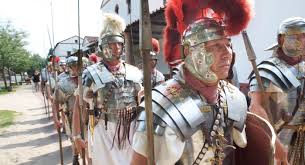
But why would a nation commemorate the presence of Romans, an event that already happened so very long ago? There are several reasons for that. From a personal level I remember as a young child there was something fascinating and magical about Romans and their Roman Empire. Most of all, their soldiers looked cool. They wore impressive outfits and the soldiers were very well trained and usually would easily beat their enemies.

romans
Roman soldiers

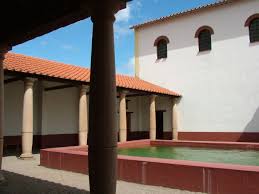
I think this is still applicable to the children that grow up nowadays even in this time of TV and video game ‘superheroes’, the Romans still have this special attraction to children. If you want to know how life in the Netherlands was during the Roman presence you might consider making a trip to Archeon in Alphen aan den Rijn. They rebuild buildings from that time, like a Roman bathhouse and there are shows with Roman soldiers and gladiators.

Unknown
Bathhouse in Archeon

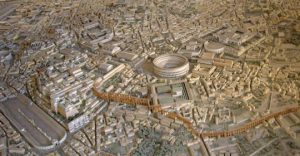
As I grew older and studied ancient history I learned that there were many other reasons why the Romans could be considered ‘cool’. They managed to unite and unify large parts of the tribes and people that lived in Europe, something that no other military or political figure since then has managed. And they knew how to stay in control: the larger part of their empire would be united for nearly 1000 years. It seems almost unbelievable that with the modest technology they had at their disposal they managed to keep together an empire that stretched from England and Spain in the West, Germany in the North, North Africa in the South and stretched all the way to Egypt and Israel in the East. The Romans built a capital, Rome, that was unlike anything the world had ever seen until that point. Millions of people were living in that city and it would take until the 19th century before humanity would see new capitals with a comparable figure of inhabitants.

Rome

The Dutch people have always had a keen interest in their history. And the Romans have left us many things to remind us from the time they were present in the Netherlands. Not as obvious like temples or buildings, those have not survived. But by excavating or by pure accident many objects from the Roman time have been found. Not only phyiscal objects like (coins, household items and tombstones to name a few) but also infrastructures like the roads they built or the fundaments of cities and villages. Many of these found objects are on display in musea all around the Netherlands. I could recommend visiting the Rijksmuseum voor Oudheden in Leiden that has one of the largest collections on display in their beautiful museum.

For a full program of activities during Romeinweek you can have a look at the schedule.

-Den Haag, 2 May 2016-

Review: the movie ‘Steve Jobs’ (2015)

Admitted, Steve Jobs has been an inspiration for me during a larger part of my life. I remember vividly the excitement before the Apple presentations after the man’s return to Apple in 1997 as ‘iCEO’. A wiser man, knowing how to avoid the mistakes during his first time at Apple but still driven in every aspect to make ‘a dent in the universe’ as he would like to say himself.

In 2010 it became obvious that Steve Jobs was starting to lose his battle with his life threatening disease, but his passing in October 2011 was still a shock for many and one deeply felt in the world of technology and beyond. Steve Jobs was not only the most successful entrepreneur in the world of IT technology, in the years before his passing he was at the top of his game with his guidance of revolutionary  products like the iPhone and iPad and new ways of distribution and sales of software (iTunes and AppStore).

Because of these circumstances it is understandable that the world saw after October 2011 a stream of products, most noticeable books, documentaries and movies to understand and memorise this remarkable person and sparkling personality. One of the high lights of these events was supposed to be the movie ‘Steve Jobs‘ directed by Danny Boyle (Trainspotting, Slumdog Millionaire) and distributed by Sony Universalis.

From the very few things I read before I went to the theatre myself, I was under the impression that the movie got very warm reception on an artistic level, but the movie was highly unsuccessful on a commercial level in the US. This is usually a sign that such a movie is doing even worse in the Netherlands, but to my surprise the theatre was sold out at a rather irregular time (17.00 at the evening of Sinterklaas, one of the most popular times for families to gather).

The movie evolves around 3 decisive moments in the career of Steve Jobs: the 1984 launch of the original Macintosh, the 1988 launch of the Next computer and finally the launch of the iMac in 1998. This means that a visitor who is not really that well acquainted with the life and works of Steve Jobs almost certainly will not get a clear picture of the timeline of Job’s career and how the events should be viewed in context of Job’s career: the histoircal events literally come flashing by in seconds.

Instead the movie focuses on the emotional clashes with a few important people in his life. First there is his former girlfriend that had a child from Steve Jobs, Christa Brennan and their daughter Lisa. Christa is being portrayed as the cranky type , always in pursue of Job’s money, while Jobs stubbornly insists that he might not be the father of the child. There are some vague indications that his behaviour is related to the fact that Jobs himself was an adopted child. The evolving relationship between Jobs and his daughter is clearly one of the more interesting aspects of the movie, especially when Jobs in one of the final scenes admits that the LiSA computer, which he worked on after she was born, was named after her and was not an acronym for ‘Local Integrated System Architecture’.

Then there is Steve Wozniak, ‘The Woz’ was Job’s partner from their start with ‘Apple’ asa company. Wozniak is n the movie recognised as a genius for the development of the Apple I and Apple II computer. Yet already in 1984 (!) he also is irritating Jobs as he want the Apple II team to be mentioned in the 1984 Macintosh presentation, where the Macintosh represents the future of the company (of course under the guidance of Steve Jobs) and the Apple II the past under guidance of Wozniak, although still Apple’s moneymaker at the time. But it even gets worse during the movie, because Wozniak is still around in 1998 before the iMac presentation with the same request for Jobs (to mention some of the original team Apple II members in his keynote). This is not only completely unbelievable, but also becomes a somewhat boring aspect of the movie: all the same people in Job’s life suddenly showing up minutes before the keynote starts.

The interaction with John Sculley (performed by Jeff Daniels), the CEO from Pepsi who Jobs  invited to come and work for Apple is the most interesting of these encounters, although has very little to do with actual events that happened. It can also be confusing for the visitor who is less informed about the relationship between the two, especially when the are discussion about whether Jobs was actually fired or stepped down as Apple’s boss on his own initiative in 1985. Also is Sculley repeatedly nagging about the ‘skinheads’  that were in the famous Macintosh Superbowl ad from 1984 and there are some confusing discussions if Apple’s board wanted to cancel the airing of the  advertisement.

This brings me to the main mood and weak point of the movie. By the time we are in 1998 there are still the same people showing up with their same -already mentioned and therefore boring- arguments, there are only few twists to keep the story interesting and going. As mentioned all these events take place minutes before Job’s presentations. Knowing the perfectionist Steve Jobs it is impossible that he would even have these events happen right before a presentation. If you can set aside all these non-historical events and are more interested in the emotional aspects and developments of Job’s whimsical character this movie might be for you. On the other hand if you want to get a better understanding how Steve Jobs turned Apple into the largest and most successful company in the world, I recommend that you watch another recent movie about Steve Jobs:  the 2013 movie with Aston Kutcher (‘Jobs‘).

-Den Haag, December 10th 2015-

Sail Amsterdam 2015

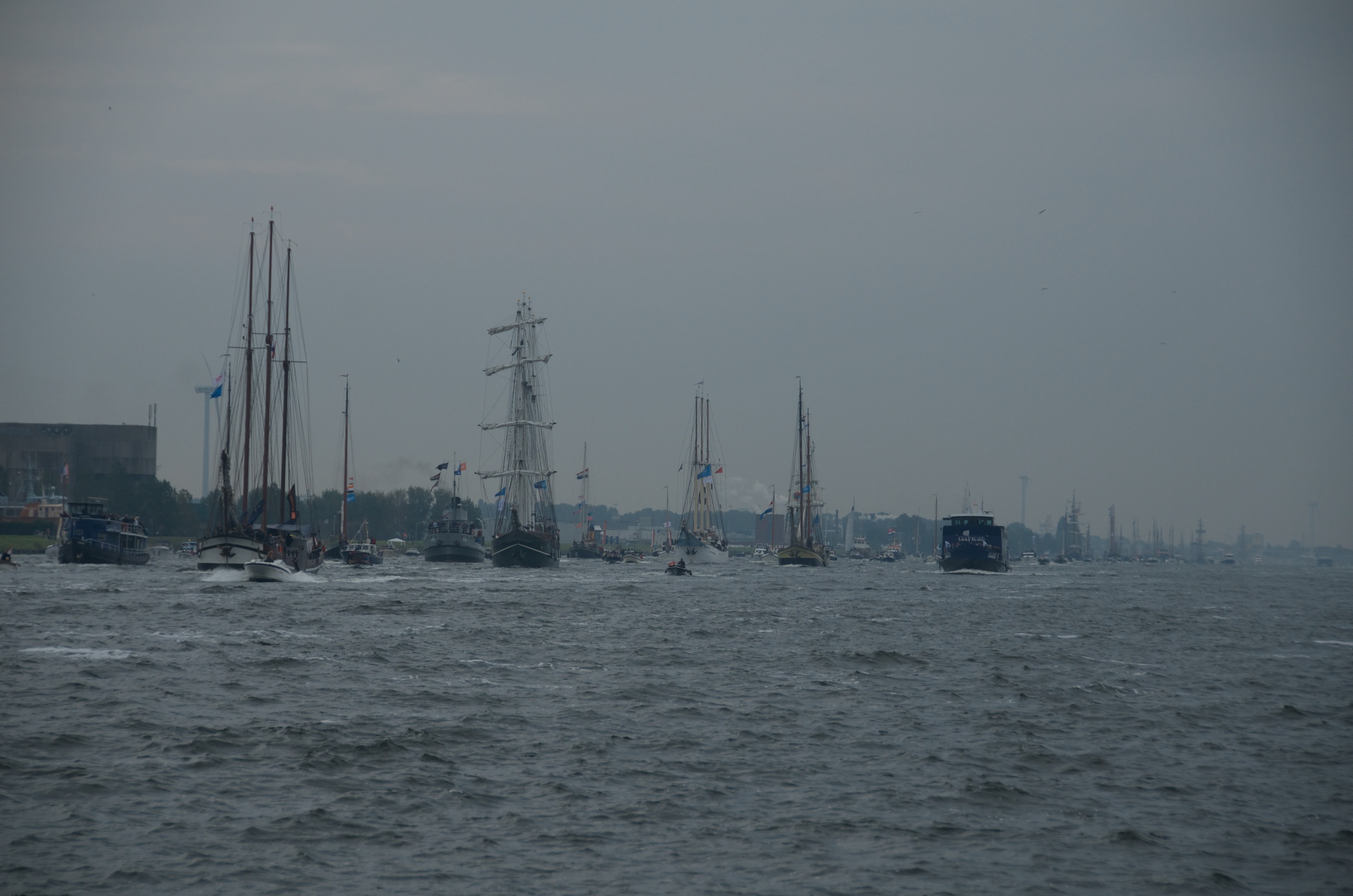
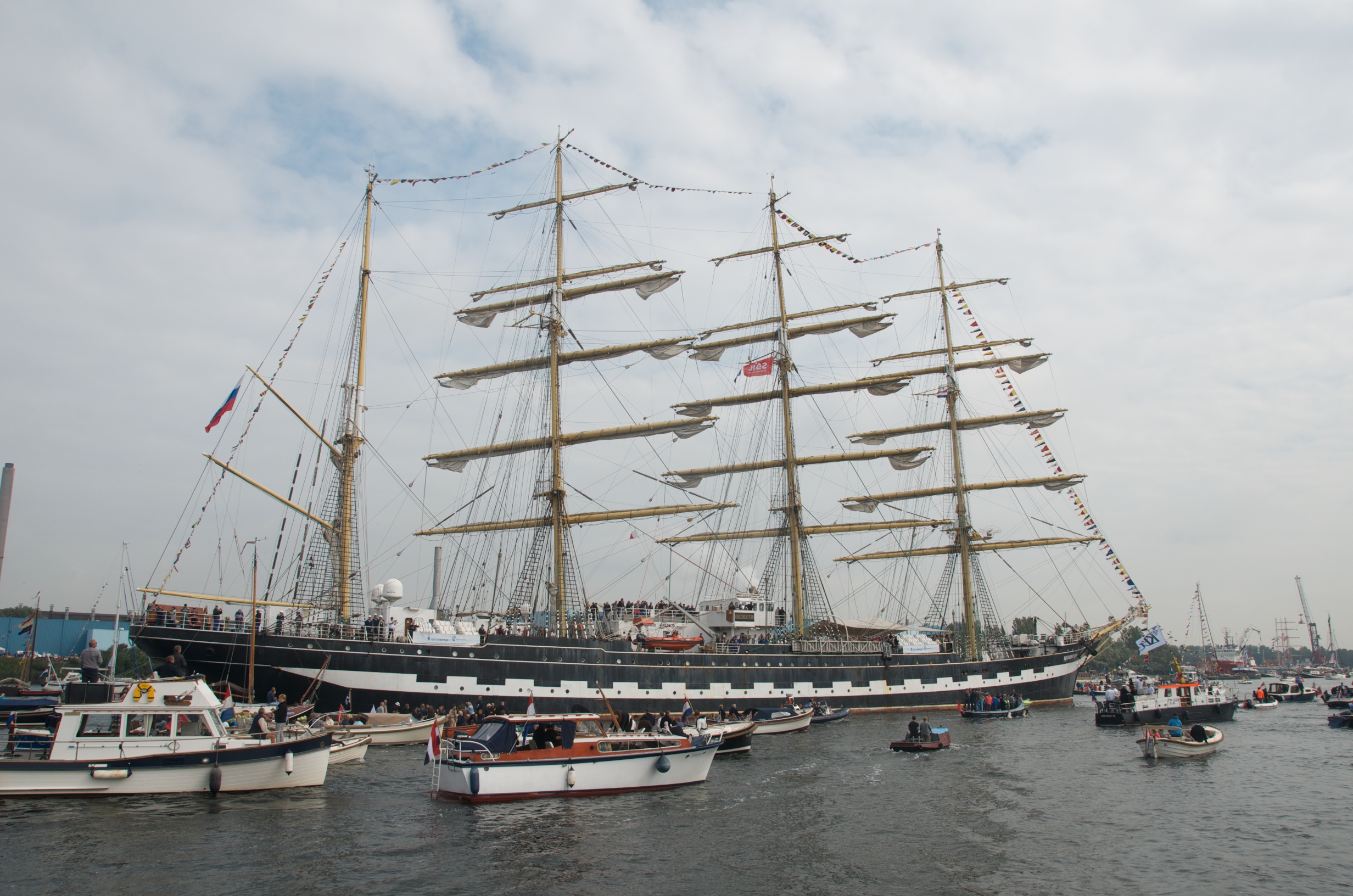
I was lucky  to be on board of one of the ships (de Saffier) that participated in Sail Amsterdam 2015. Sail Amsterdam 2015 is the biggest parade of ships, boats and vessels in the world. It only takes place once in every 5 years in Amsterdam, mainly it is so expensive and complicated to organise.

Sail 2015 mainly consists of 3 stages: first there is ‘sail in’ where all boats gather in one place outside of Amsterdam (Ijmuiden) and from there they sail back to Amsterdam in on a big parade. This was the event I participated on August 19th 2015.

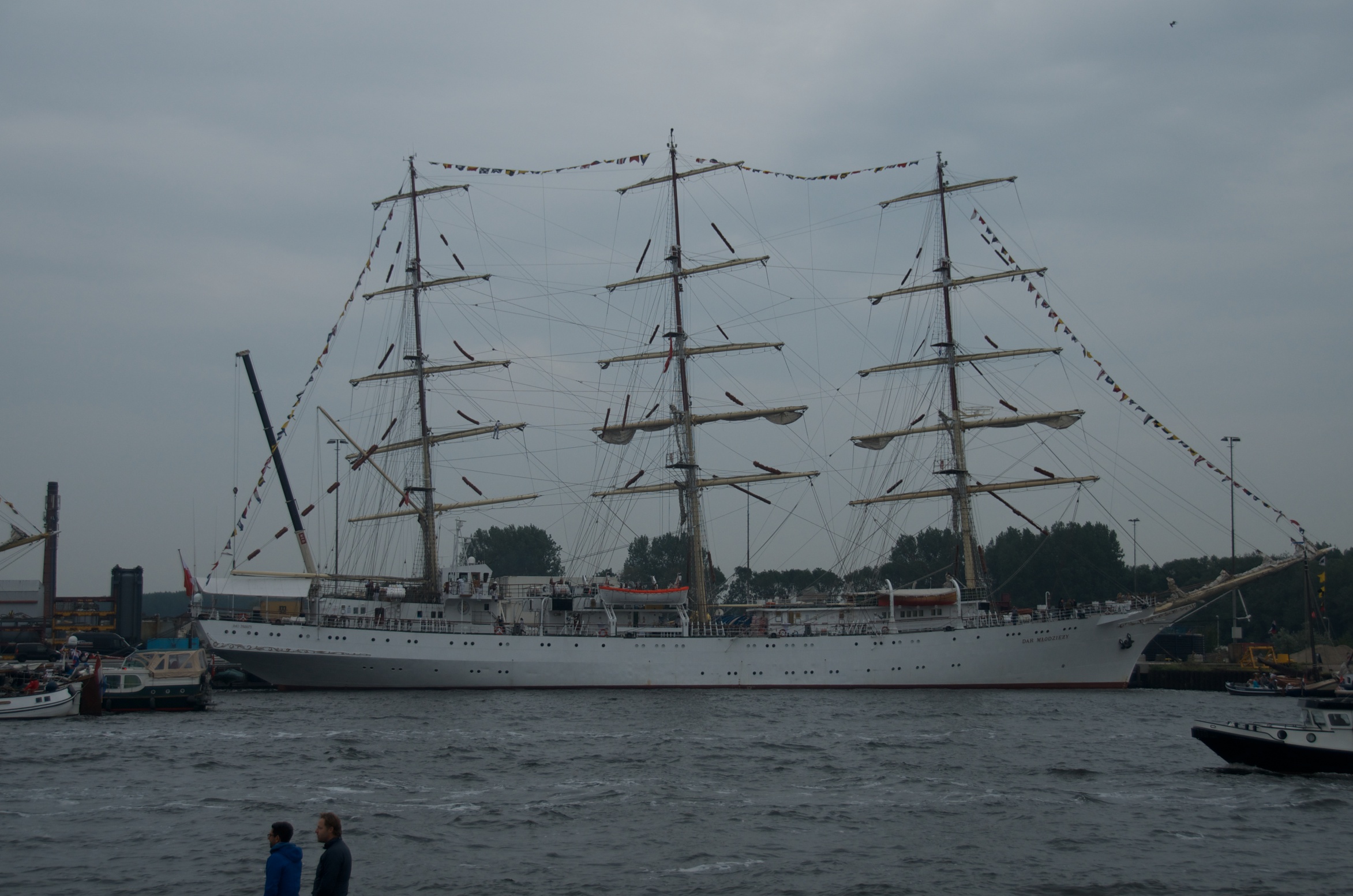
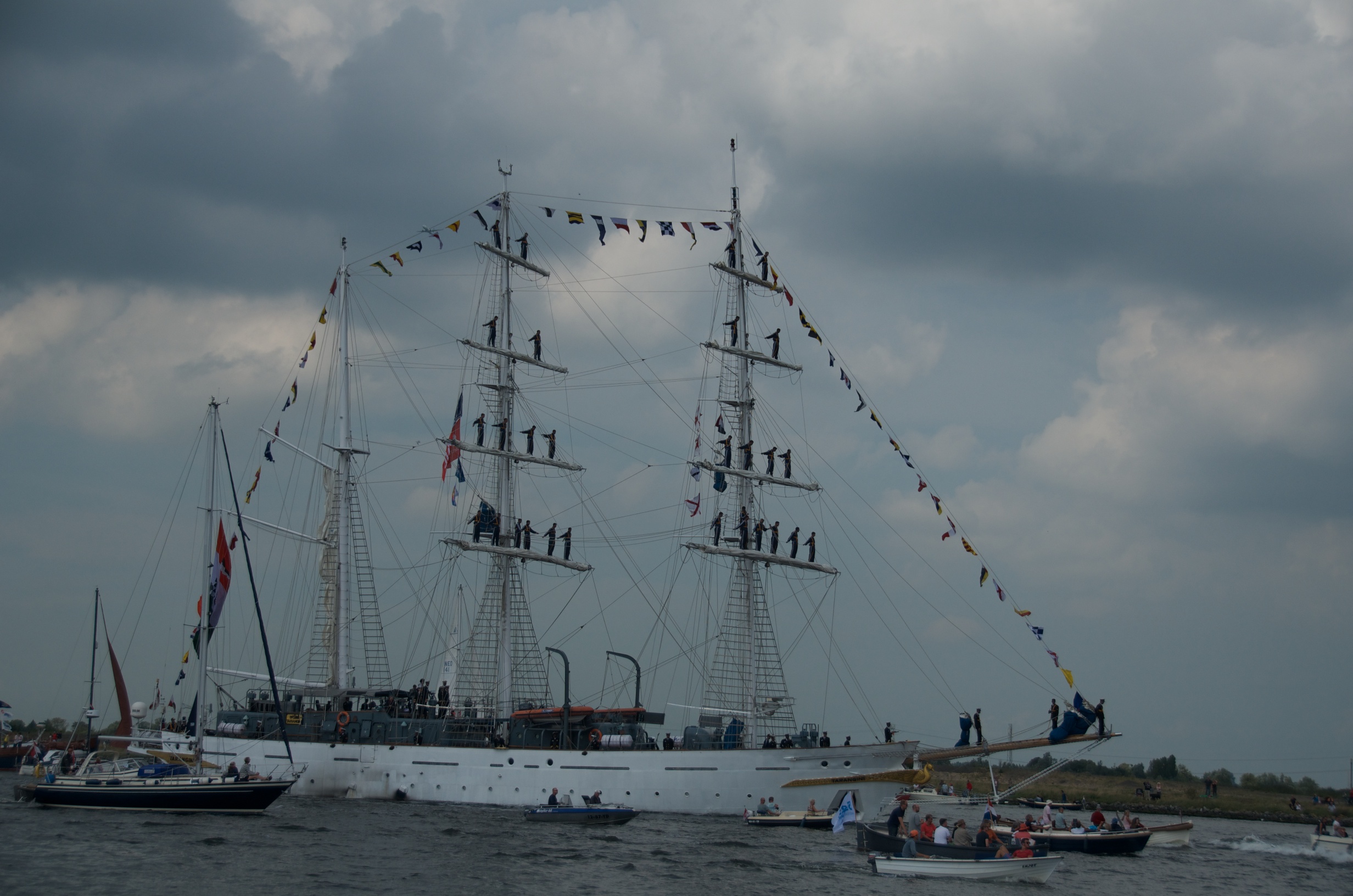
The big ships (called tall ships) are the main attraction and they are accompanied by a wide variation of all kinds of boats. The big ships lay in the Amsterdam harbour from August 20th until the 22th and during that period the ships are open for the public to watch and visit them. Finally on Sunday (August 23rd) there is a ‘sail out’:  a final parade where the tall ships leave the Amsterdam harbour.

Because the first part of the trip was to sail to IJmuiden to meet up with all the other boats, we had to be present very early in the morning. There was a big temporary location in the Cacaohaven, where alle participants gathered. In most cases these were people who were invited by companies to join them aboard the boats. In my case I was invited by Dutch company Between.

We got on board around 08.00 AM and soon afterwards headed for IJmuiden.

sail2015 706

sail2015 707

sail2015 708

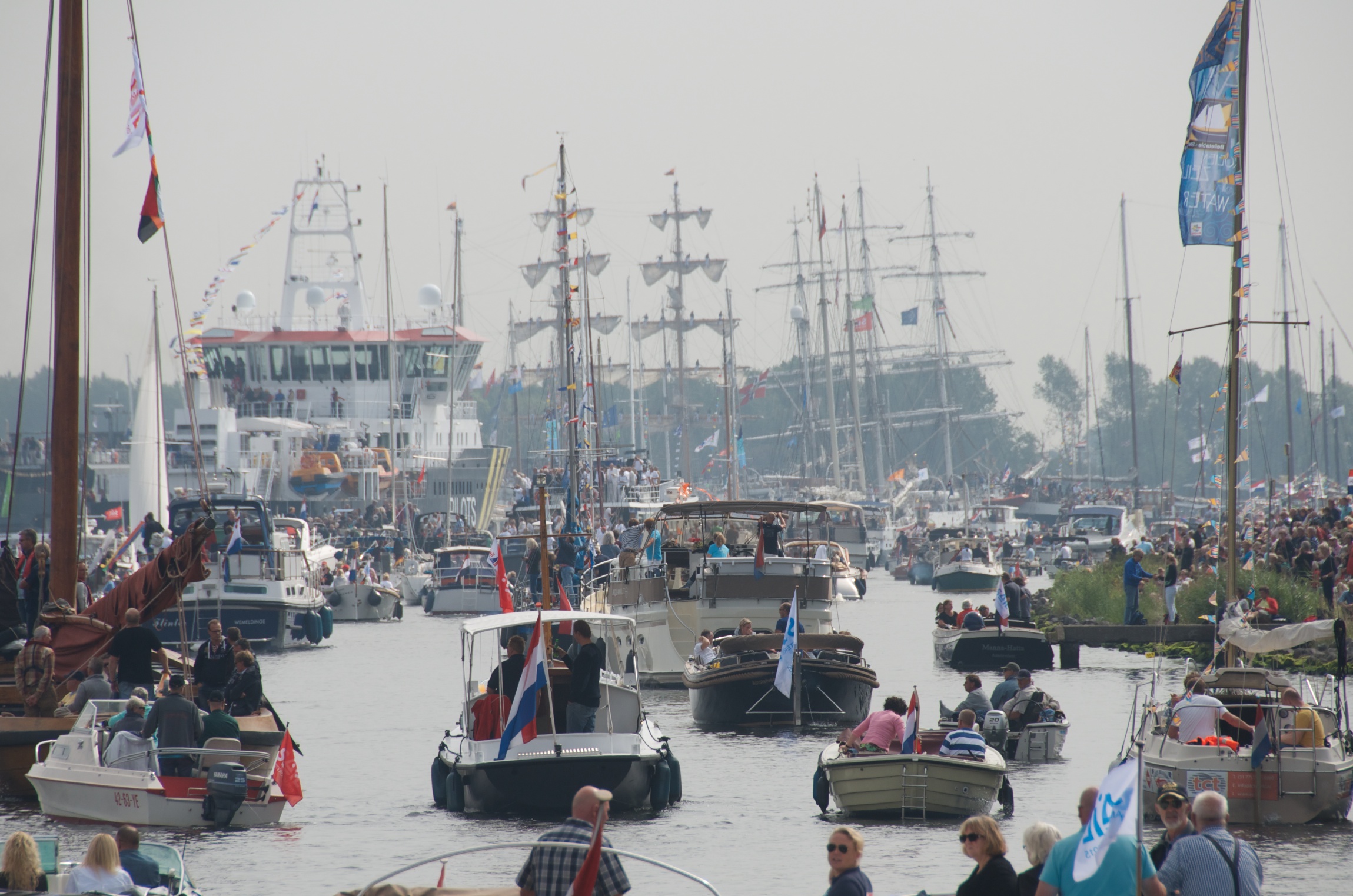
After arriving in IJmuiden we returned to Amsterdam joining this huge amount of boats that participated in the parade. Along side the route on the sides of the canals there were many spectators watching from the bank of the canals.

sail2015 709

sail2015 710

sail2015 713

sail2015 712
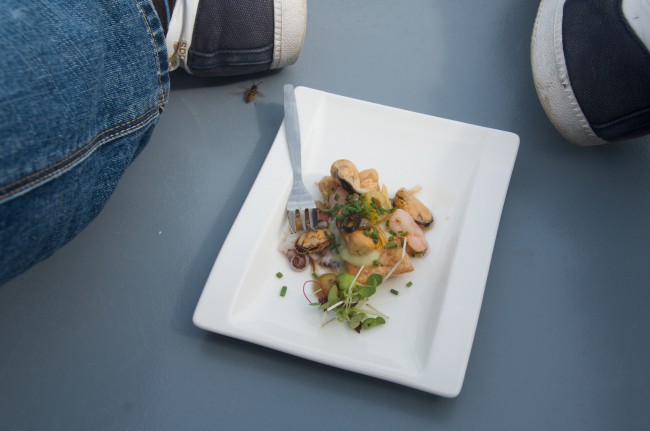
During our trip delicious food was being served.
sail2015 714
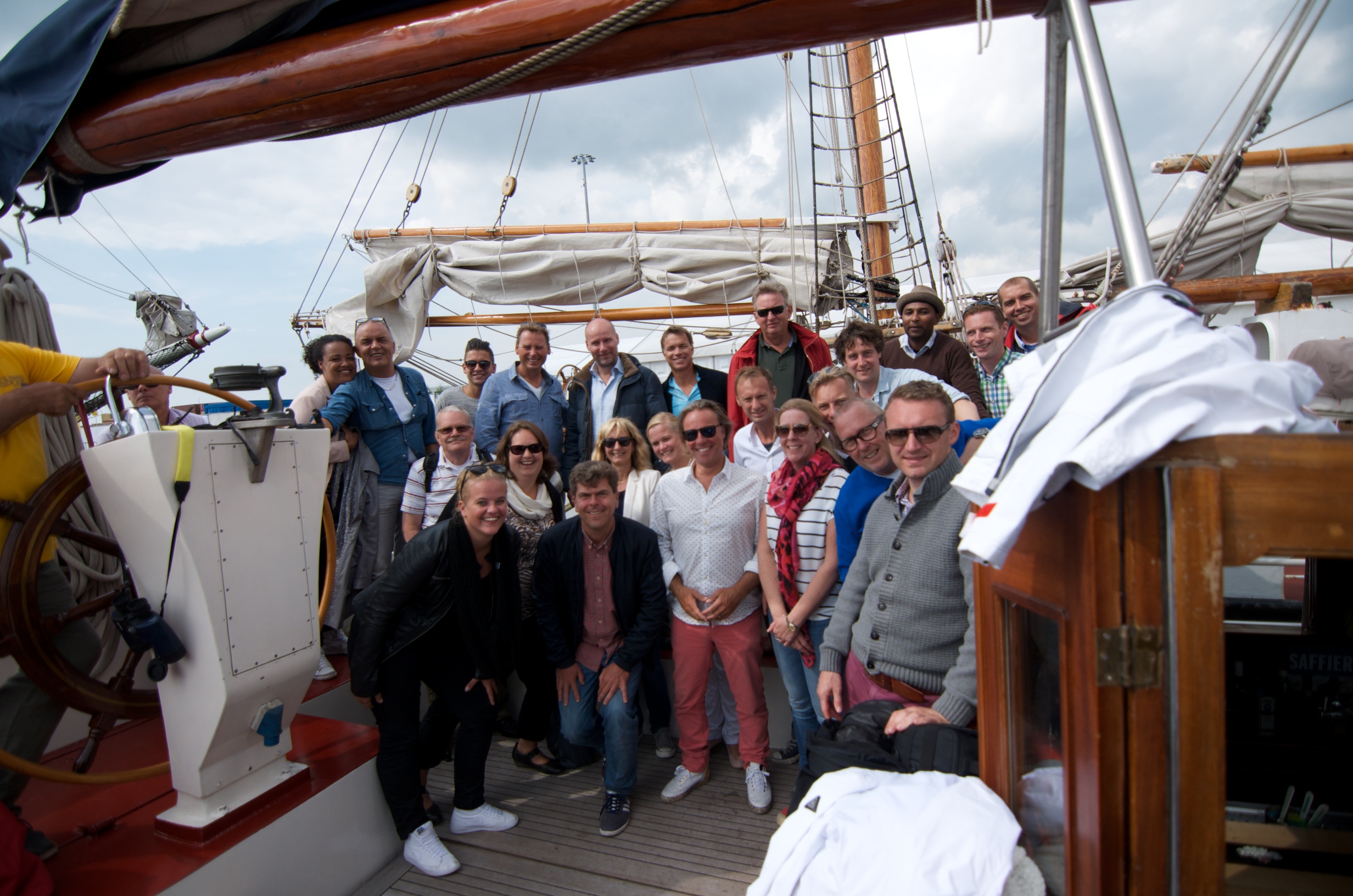
As we returned in the Cacaohaven at 3 PM it was time for one final group picture.

If you intend to go to Amsterdam, then here is a handy PDF with all information about the location of the ships.

There is a beautiful website from the Dutch Public Television about the current and previous Sail events.

And there are webcams: Port of Amsterdam.

-Den Haag, August 19 2015-

Updated on Augustus 20th.

Our Visit to Tong Tong Fair 2015 – Den Haag

Today Adek Deny and I visited the 57th Tong Tong Fair in Den Haag (The Hague, The Netherlands). The Tong Tong Fair is one of the biggest fairs in Europe with products and information about Asia and especially about Indonesia. Originally the fair started as a gathering place for people from Indonesia in the late 50s and originally was named Pasar Malam.

Den Haag was an obvious choice because after the second World War and Indonesia’s independence many people from mixed Dutch and Indonesian descent (the so called Indo’s) decided to move from tropical Indonesia to less-tropical Netherlands and the city of Den Haag was a popular place to settle. It is well known that many of the immigrants had and still have many fond and nostalgic memories of their home country and the Pasar Malam was one of the few occasions once a year to share these feelings of what the Dutch define as “weemoed”. This nostalgic atmosphere is still very vibrant and present in 2015. I noticed that the majority of the visitors is still from that first and second generation of migrants that came to the Netherlands in the 40s and 50s.

Some years ago the founders of the fair thought that it would be a good idea to broaden the scope and make it a more Asian than Indonesian fair. I don’t think they succeeded in that plan (yet) as I experienced the atmosphere as very Indonesian.

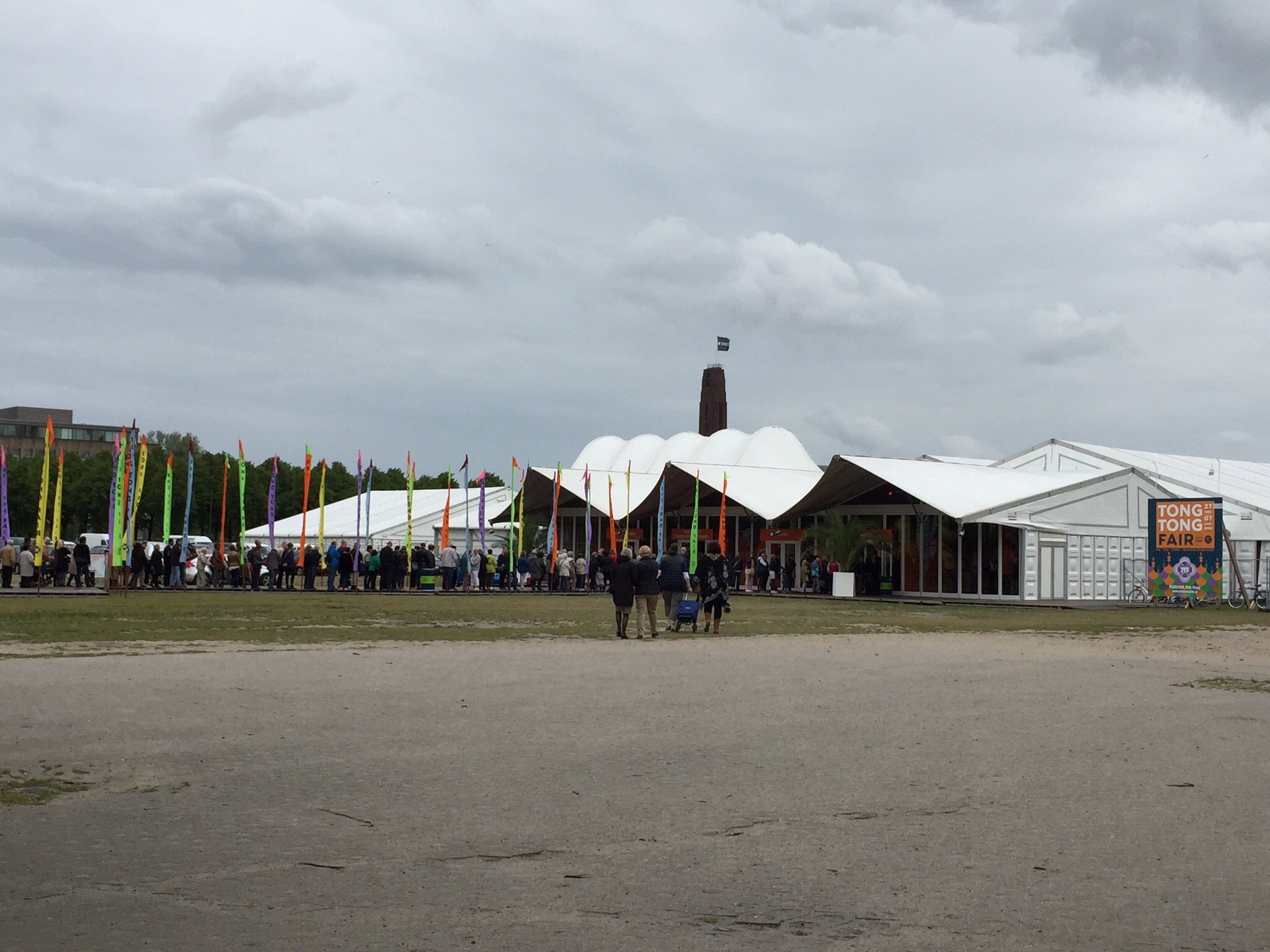
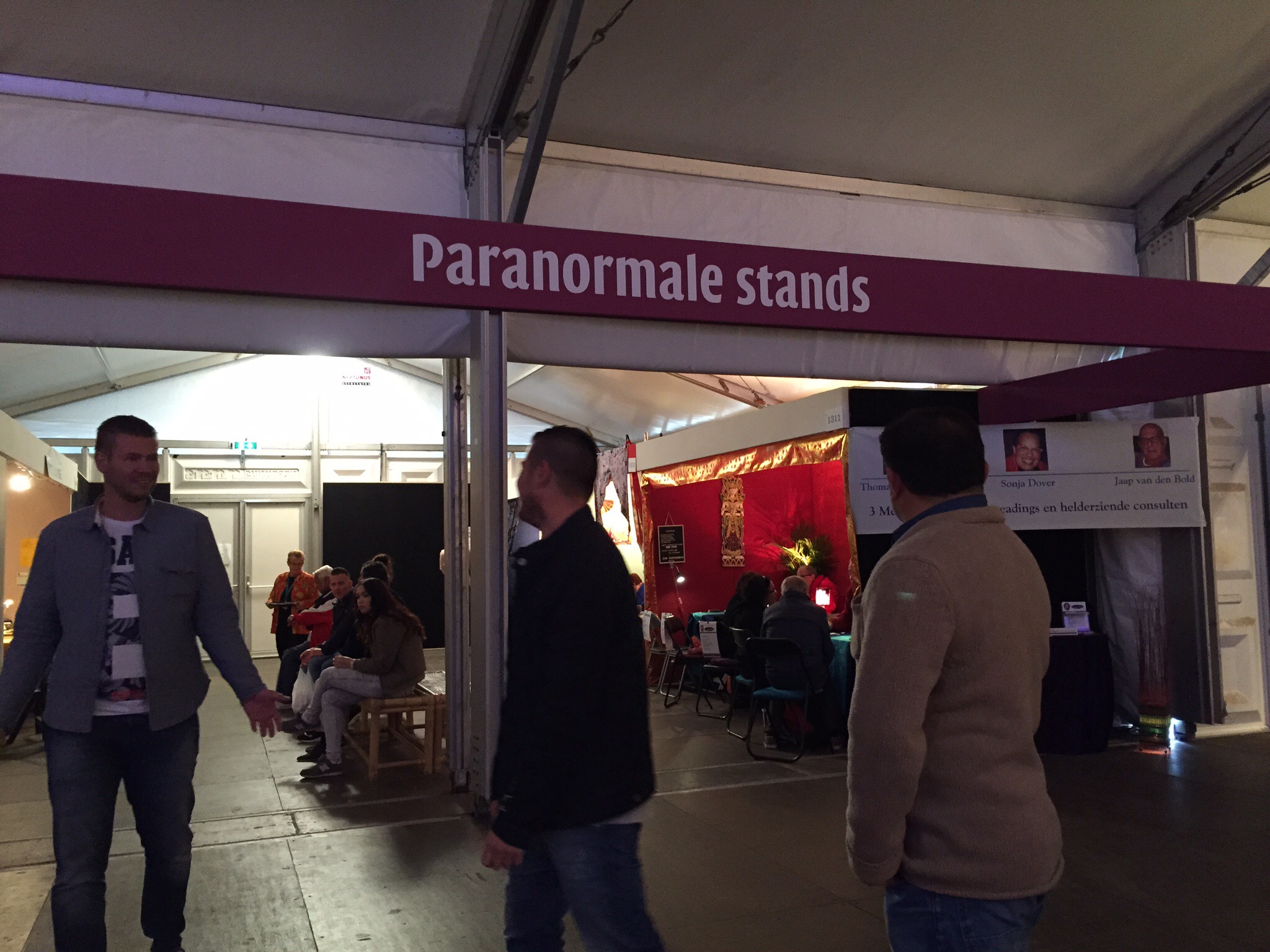
The fair is located at the Malieveld in The Hague, a huge open space and grass field where during the year all kinds of events are held. It is located in walking distance from the biggest train station in Den Haag (Centraal Station) The Tong Tong Fair is completely hosted in a complex of big temporary tents connected with -also covered- walk ways, so whether the weather is good or bad outside you will not notice it. Tickets prices range from around 10 to 14 euro for a day ticket, the price depending whether one can apply for special discounts (for students and elderly people).

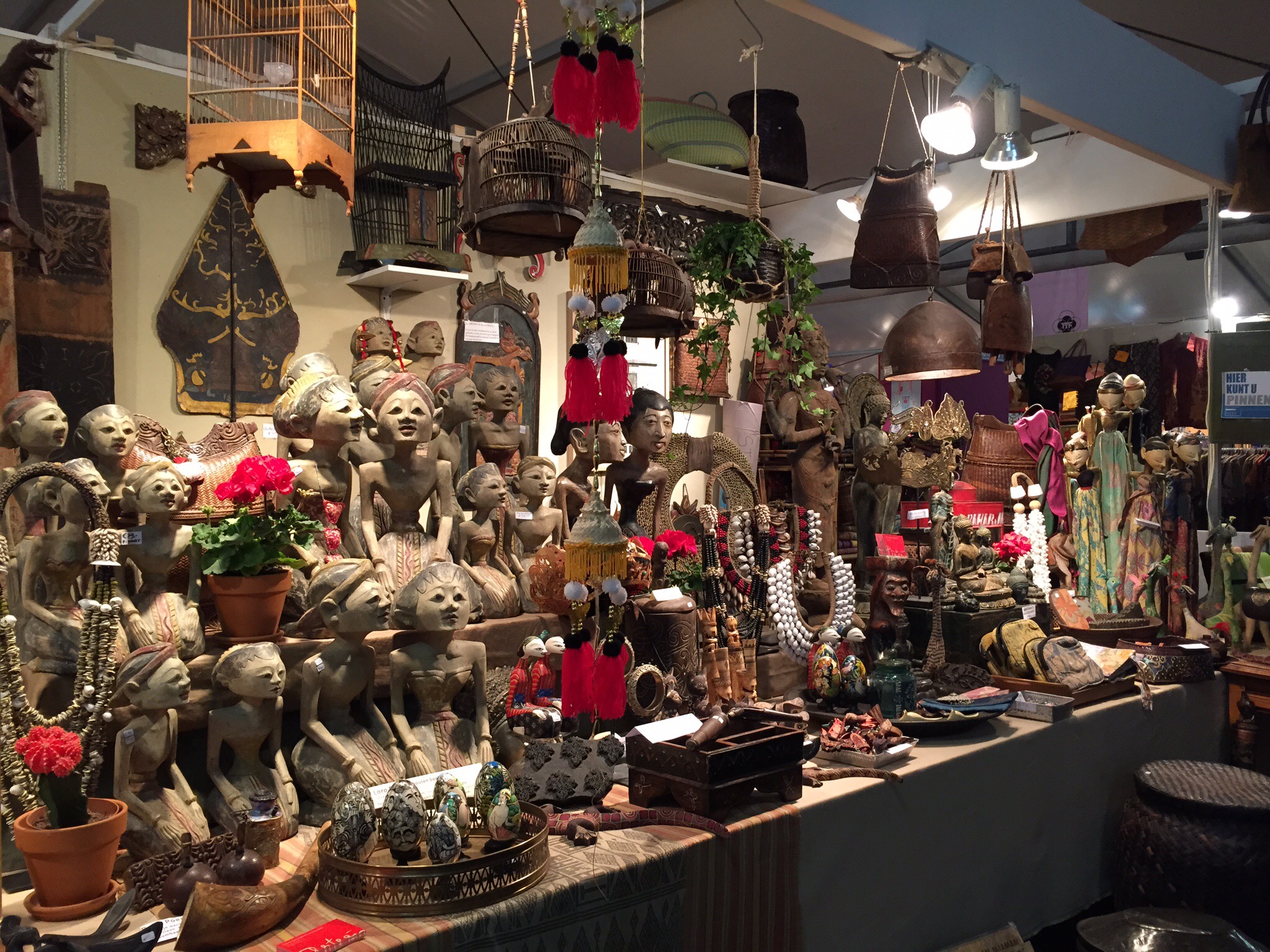
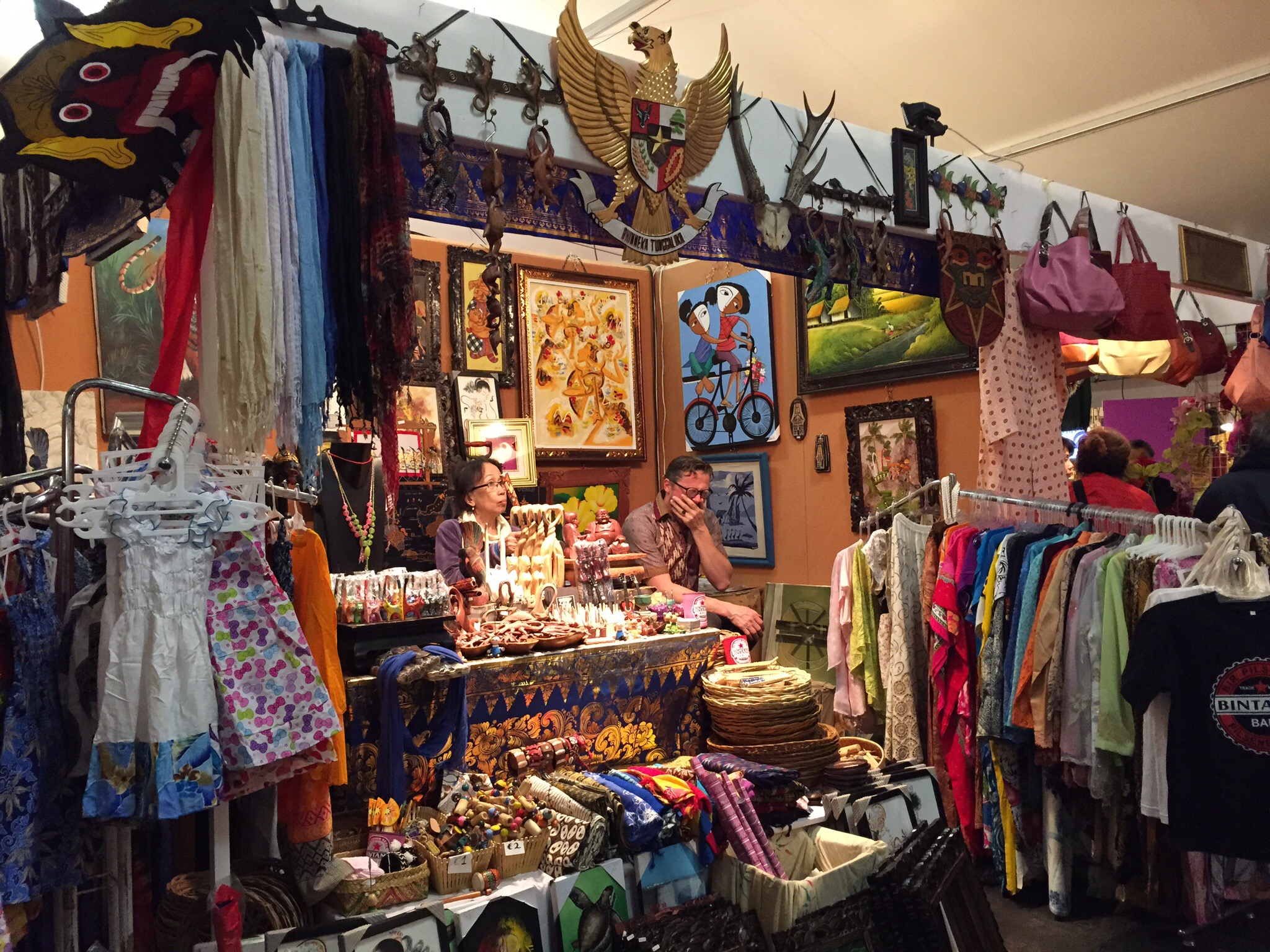
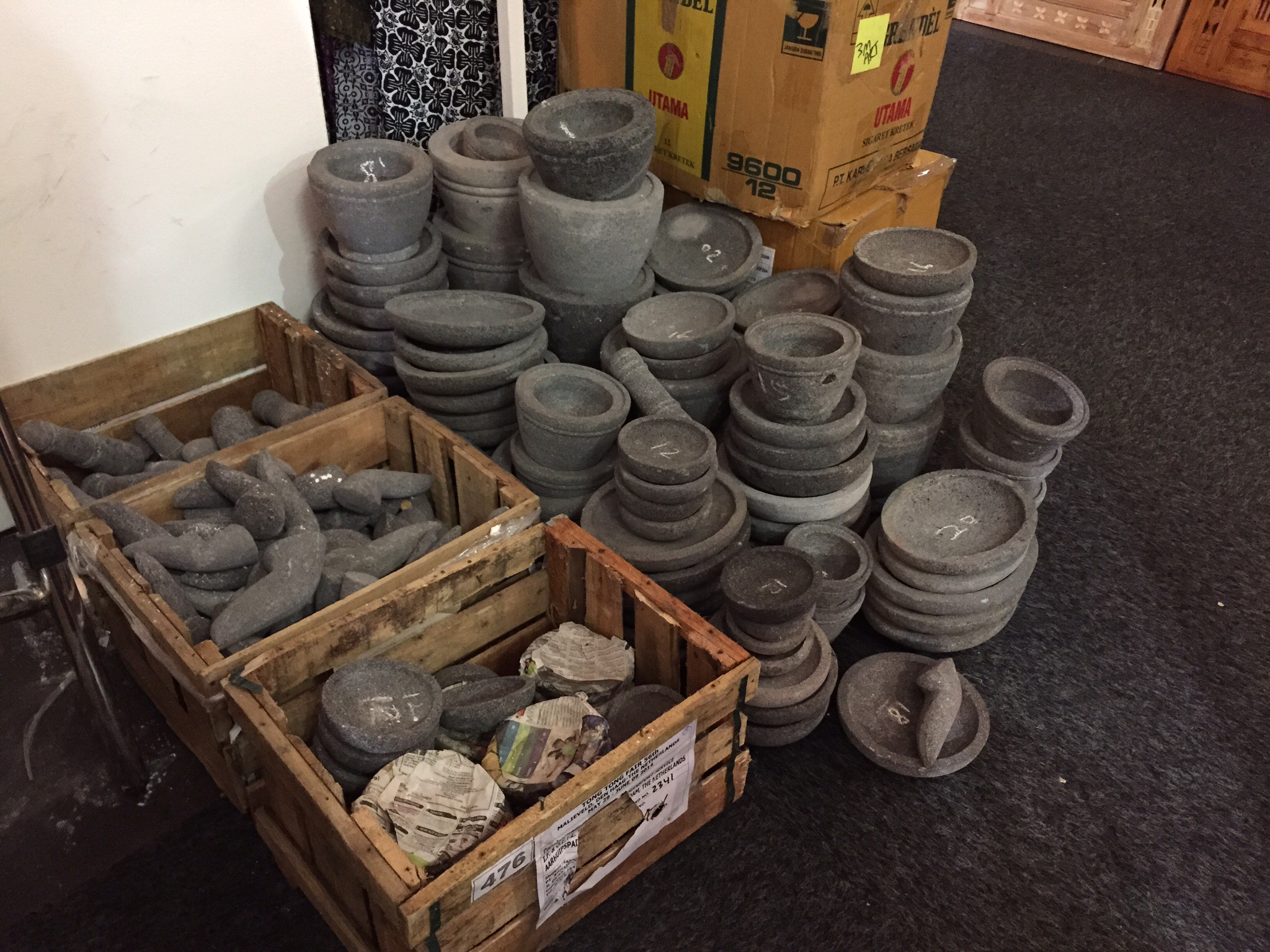
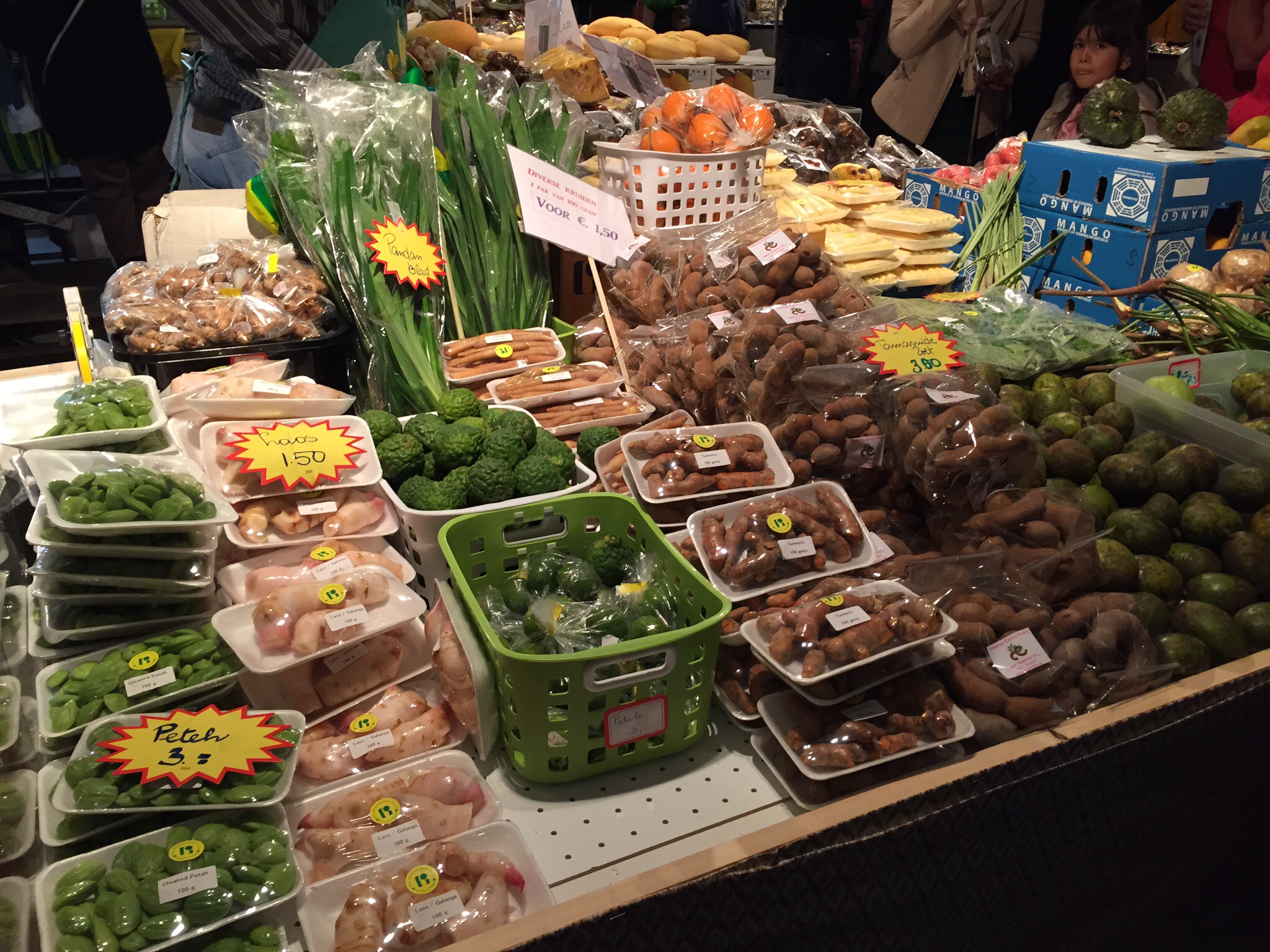
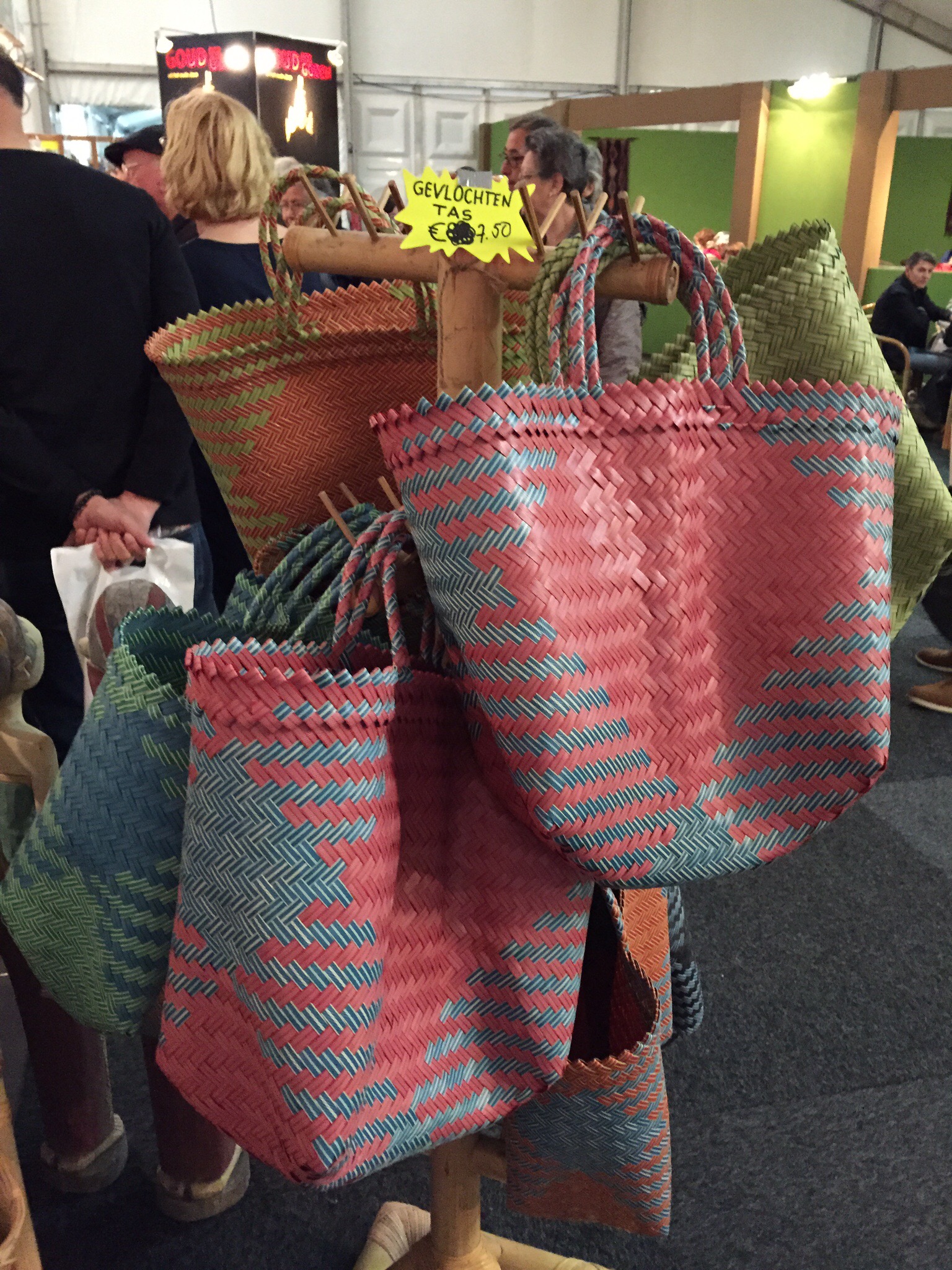
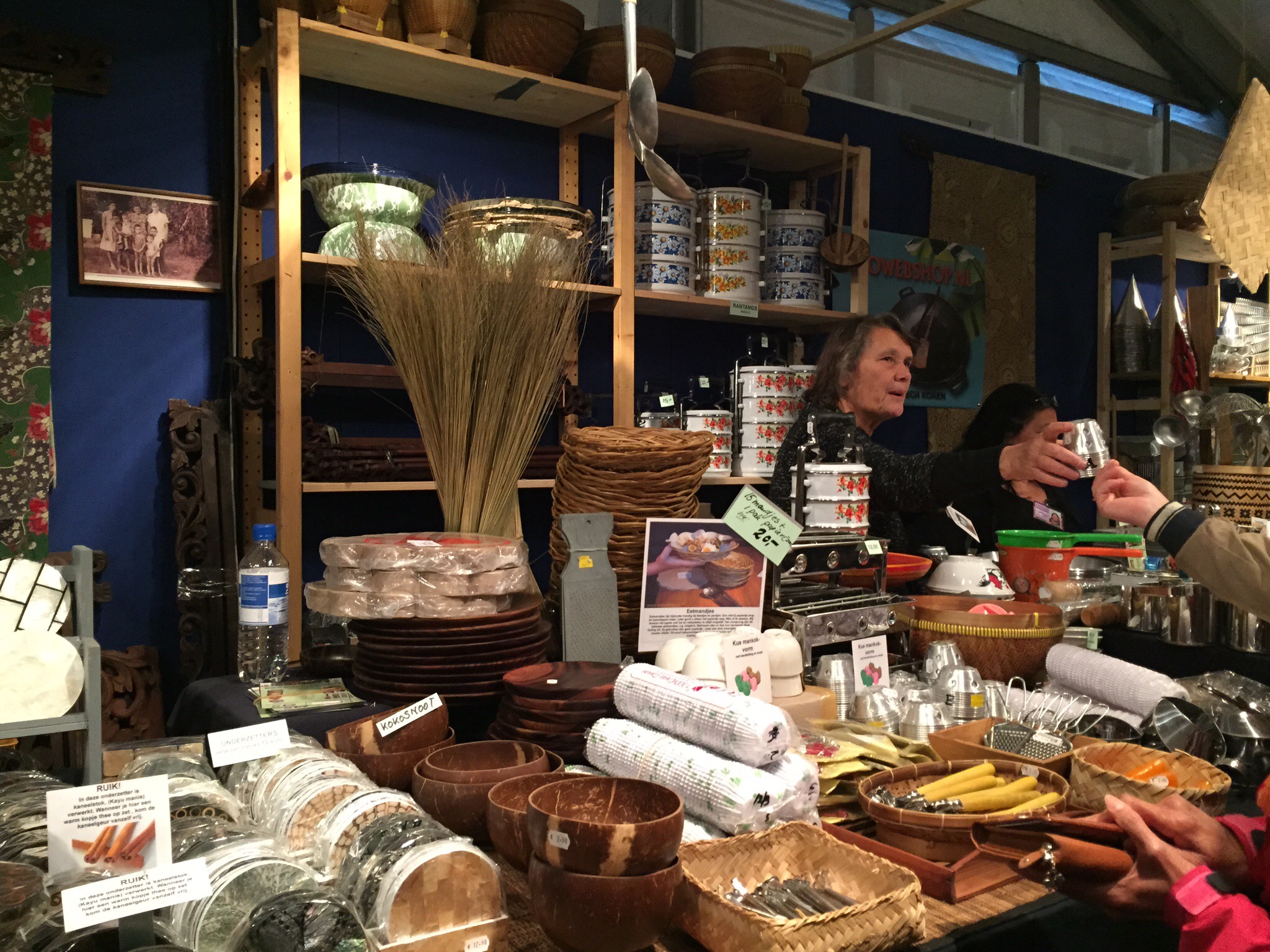
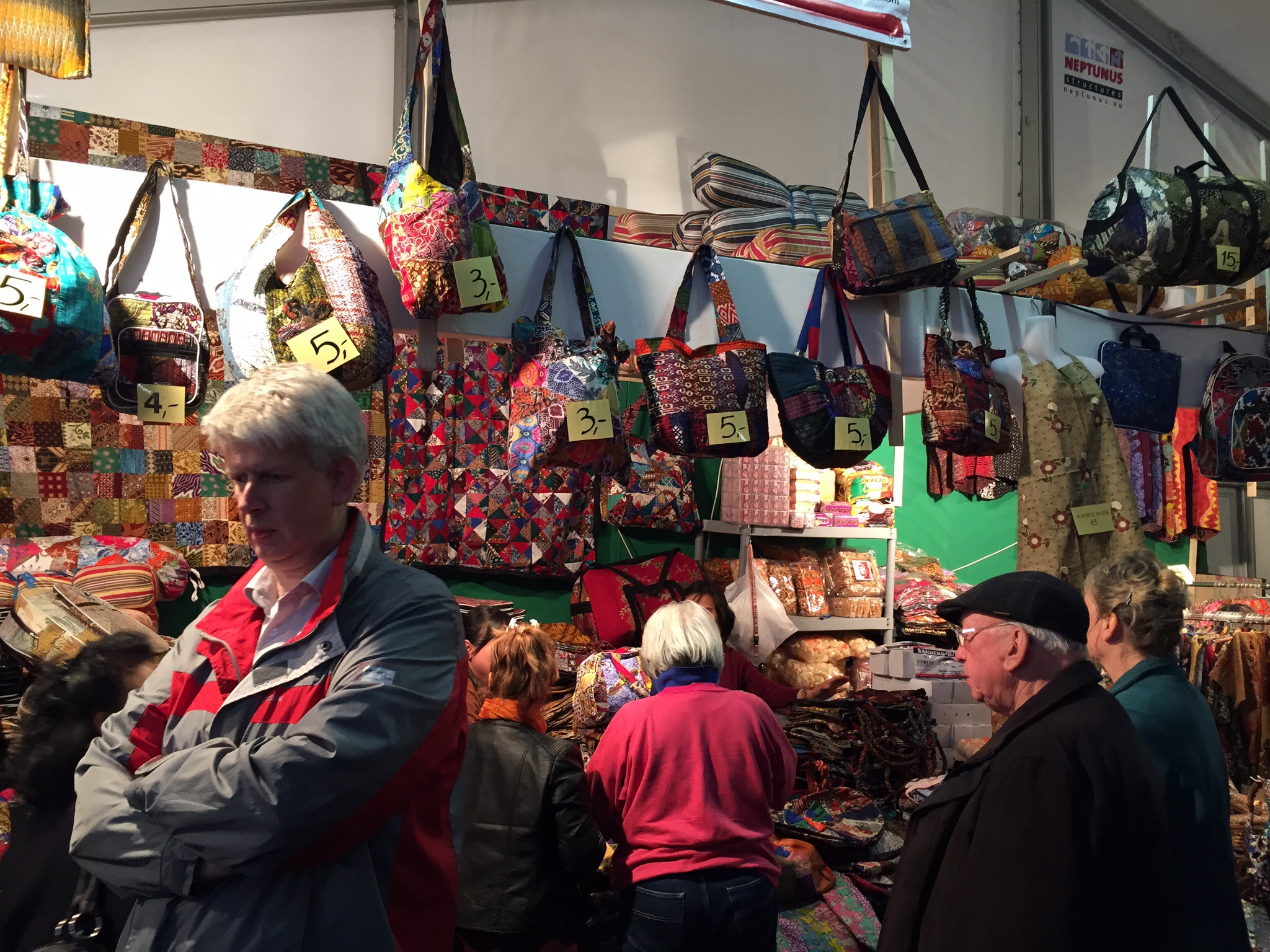
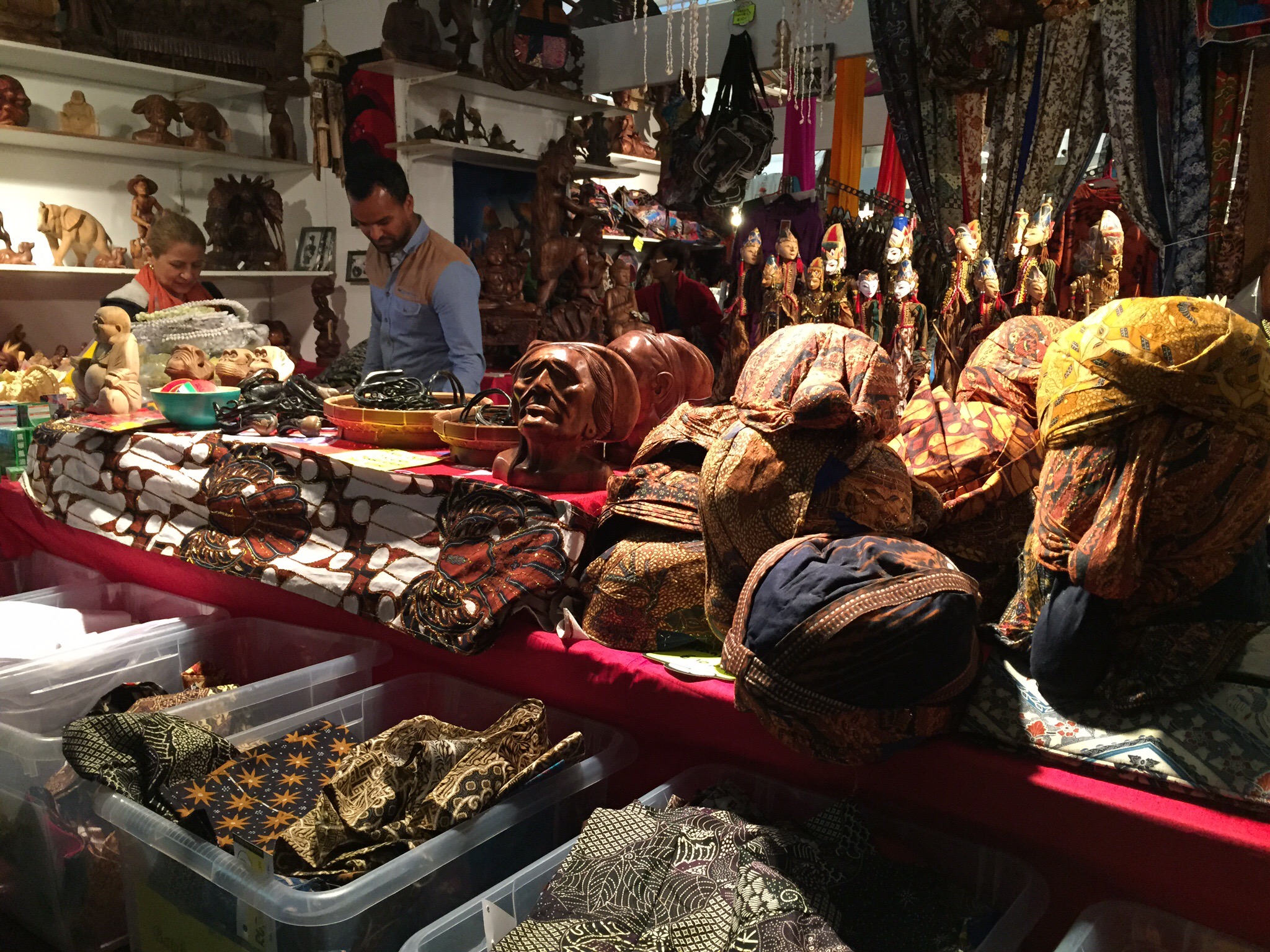
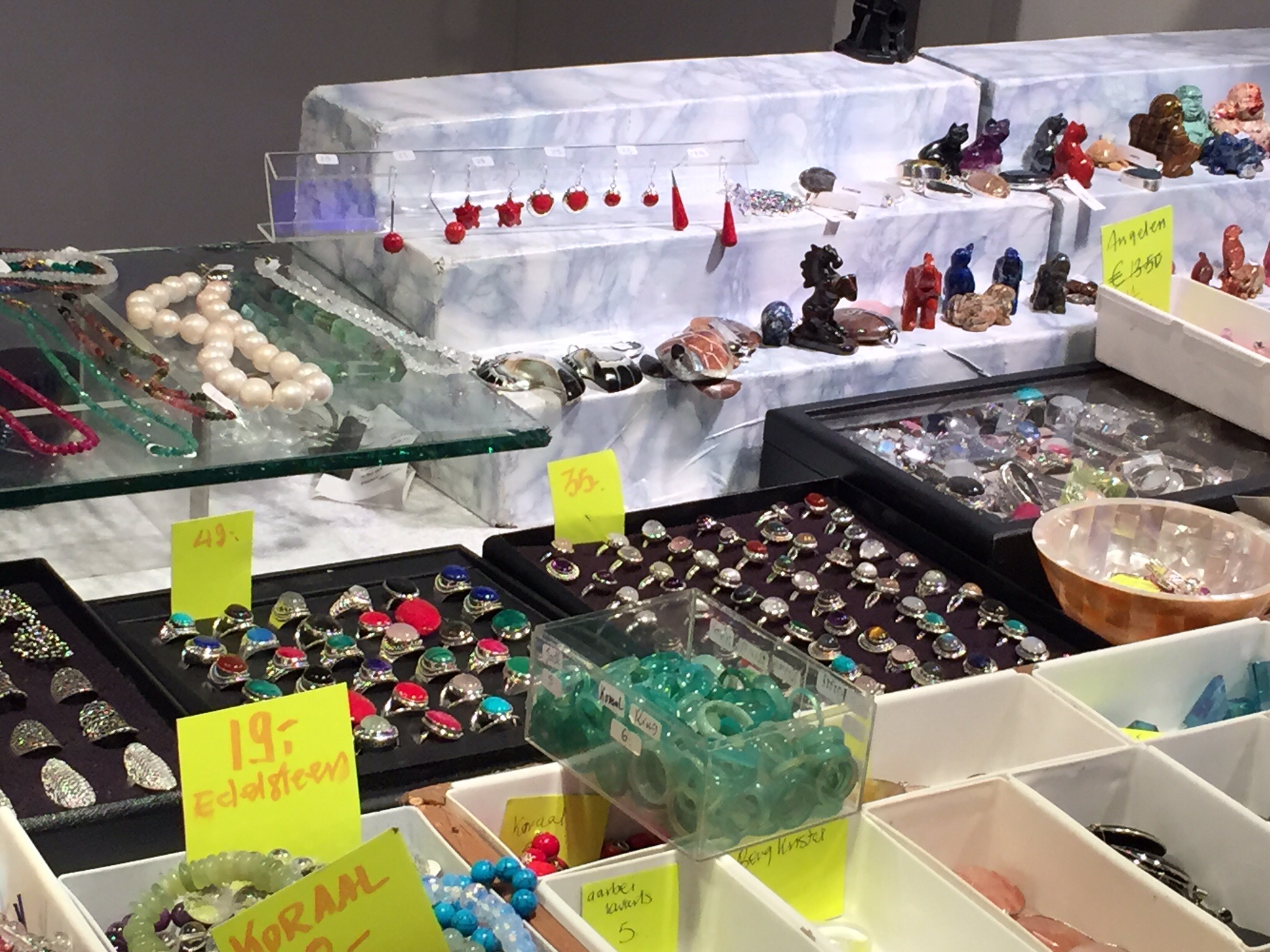
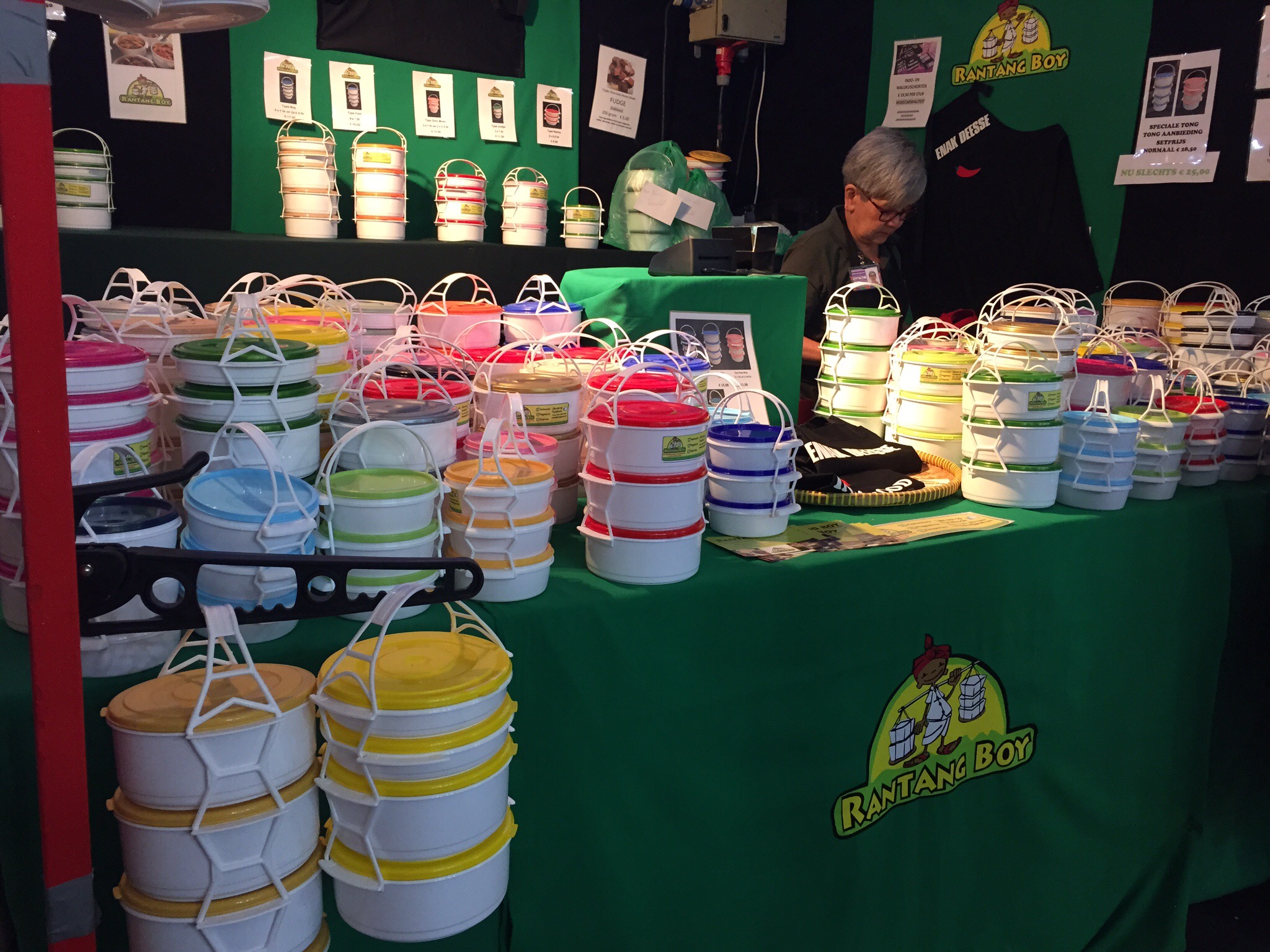
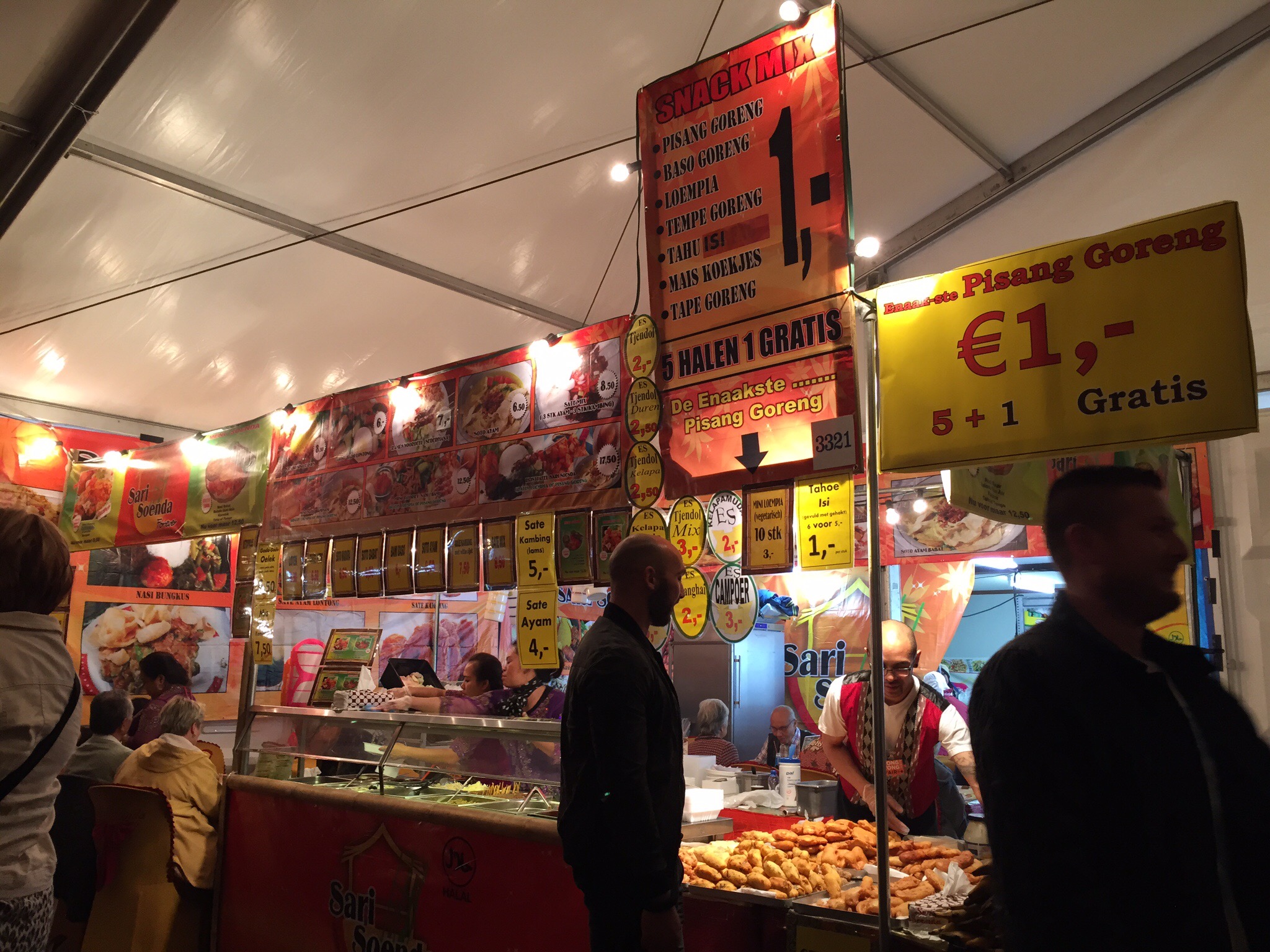
The most crowded part of the fair is the Indonesian Pavilion, where hundreds of sellers of goods and food offer their supplies. Most of them are from Indonesia and going through this Pavilion personally reminded me somewhat of visiting the side streets of Jalan Malioboro in Yogyakarta. Here you can find lots of original Indonesian food, clothing and accessories, only be aware the prices are very Dutch (so not cheap)!

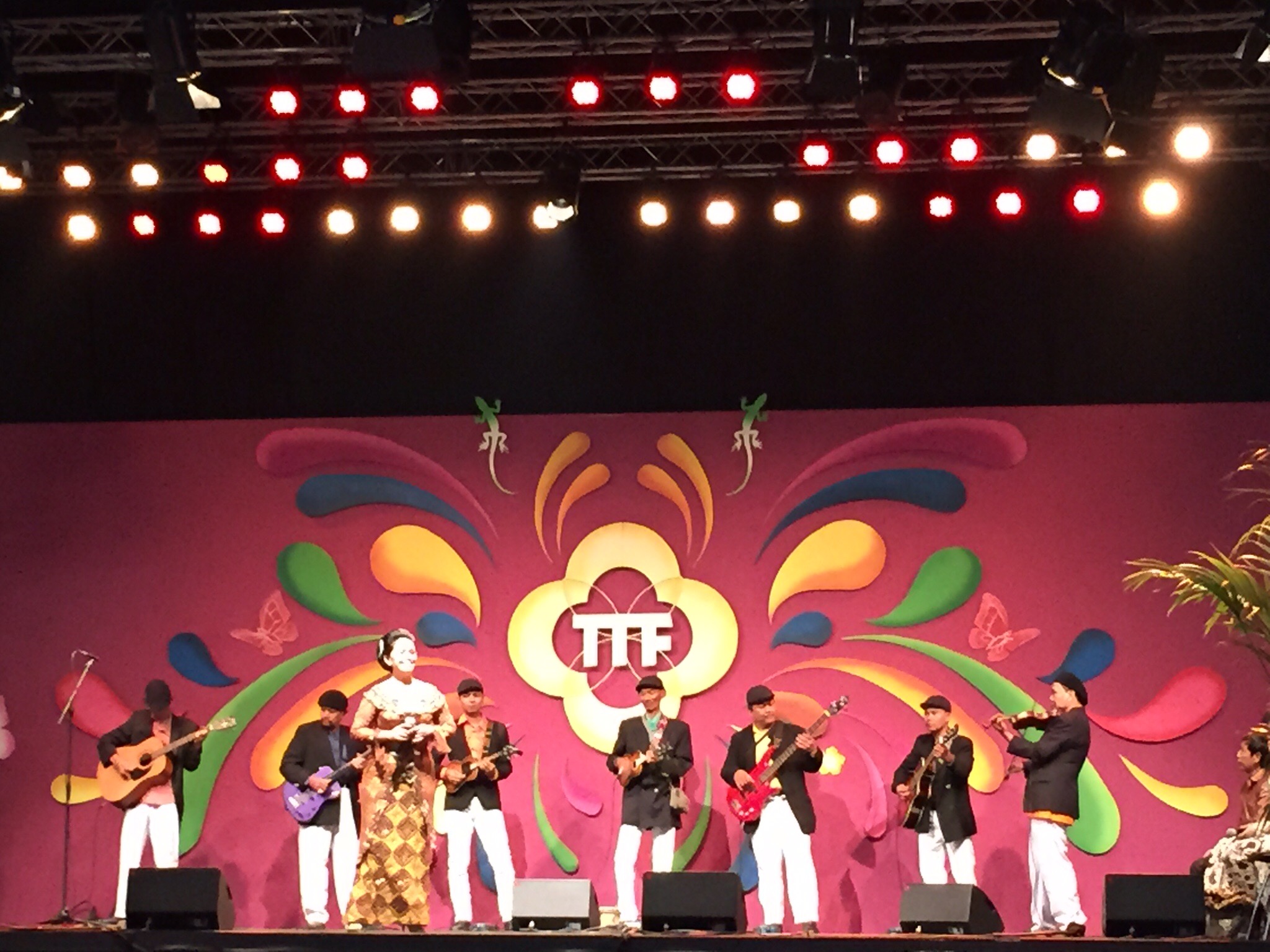
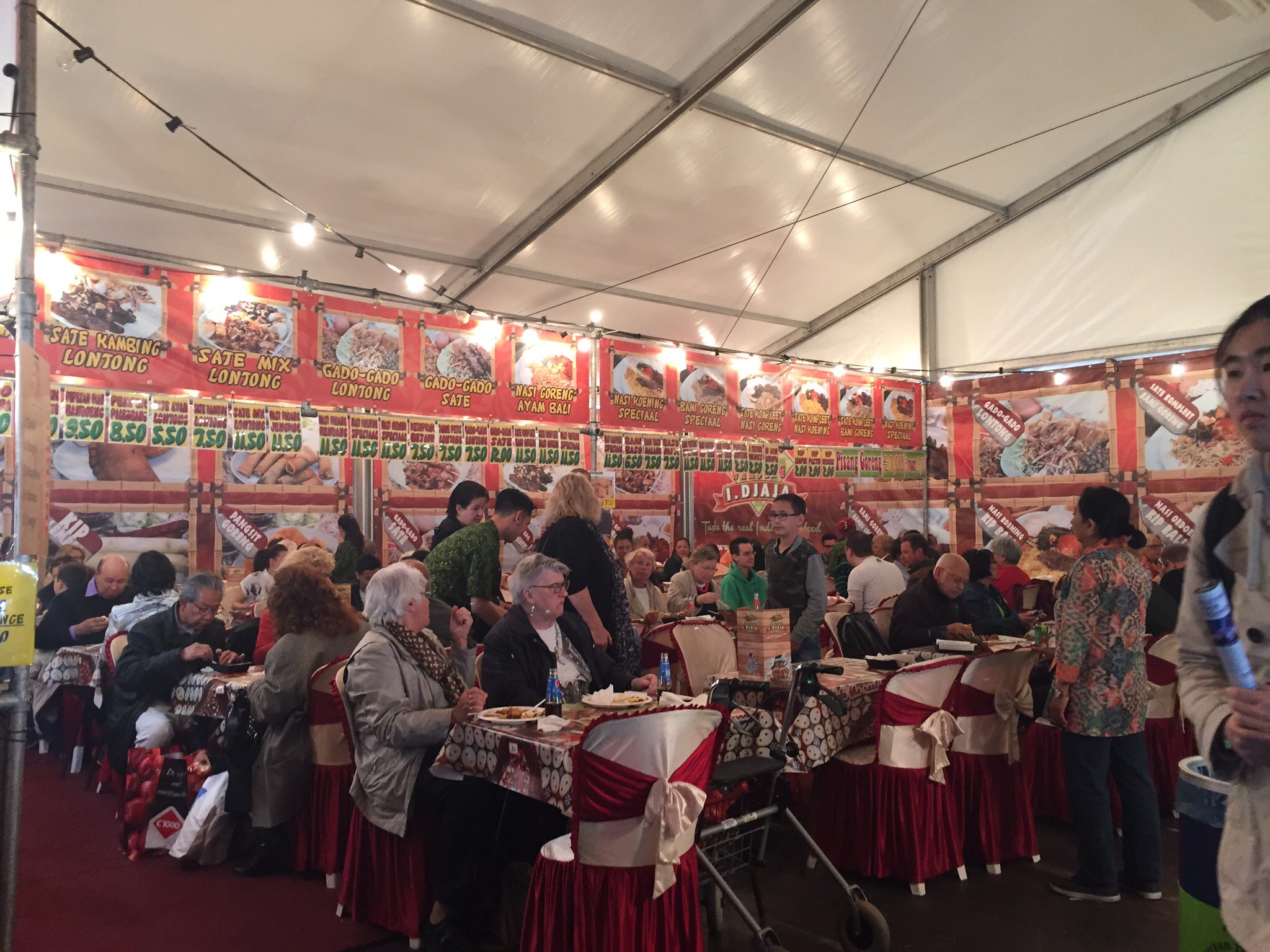
Another big part of the fair is the Grand Pasar, that has a less Indonesian character. In the back of the Grand Pasar is the ‘Tong Tong Podium’ where artists perform during opening hours until closing time. We personally visited a concert by Orkes Keroncong Cente Manis, which we liked well. There is also a ‘Tong Tong Theater’ where more serious subjects about Dutch-Indonesian relations are being discussed. Finally there is The Food Court with many choices to have your lunch or dinner in real Indonesian style.

Personally I never visited the fair before, but I found it all together a pleasant experience. There are lots of opportunities to buy special Indonesian products and lots of opportunities to try those products before you buy. So I guess that probably most guests come outside with a full belly, full bags and emptier wallets. Exiting the fair brings you back into the reality of the Dutch weather conditions as the rain was already waiting for us. For most of the visitors this means there will be the waiting for another year before they have a chance to relive their Indonesian past again.

You still can visit the fair because it will be opened until June 7th, 2015!

-Den Haag, May 29 2015-

All pictures are our own documentation.

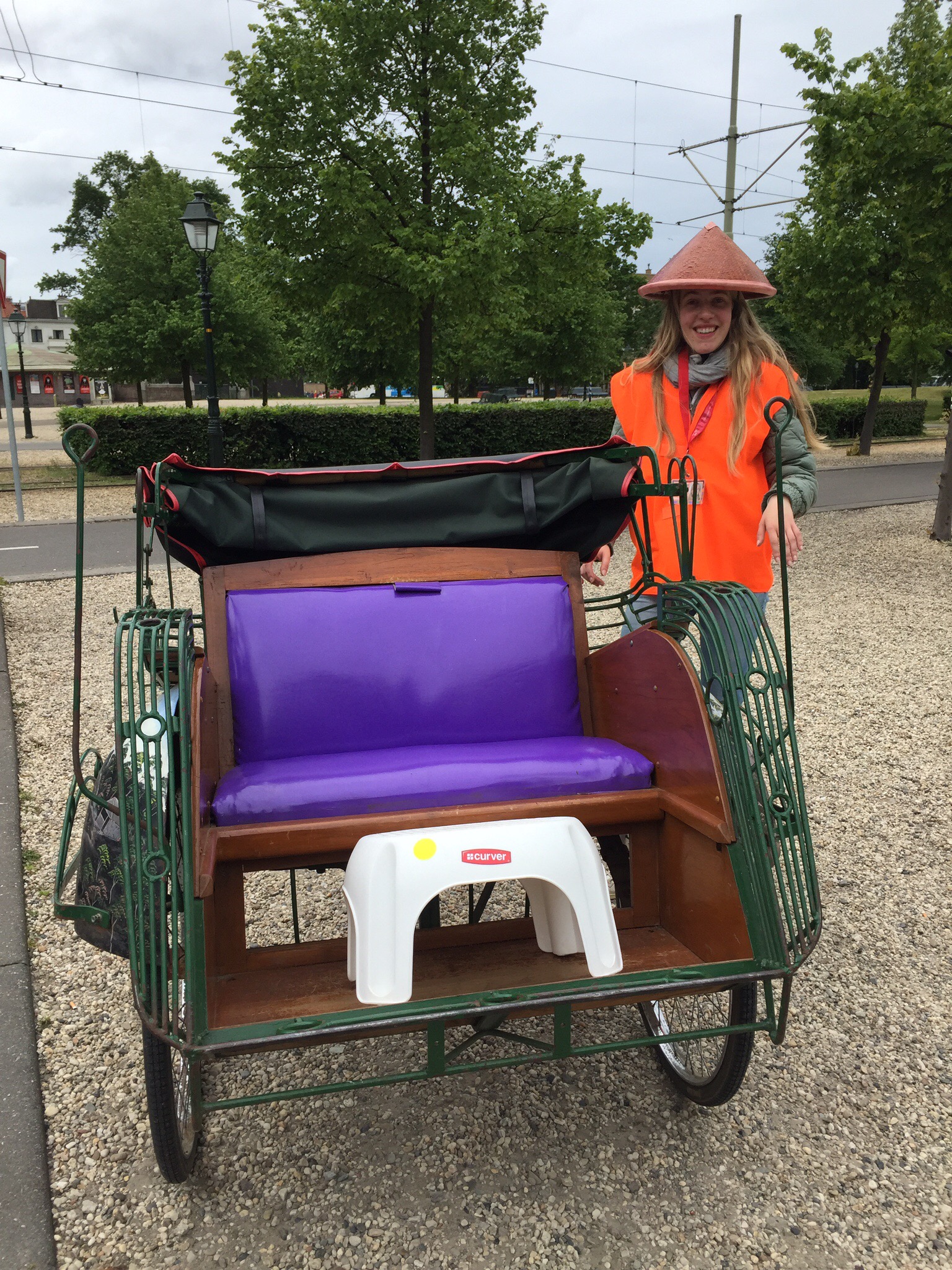
Becak
Becak

Queuing into Tong Tong Fair 2015

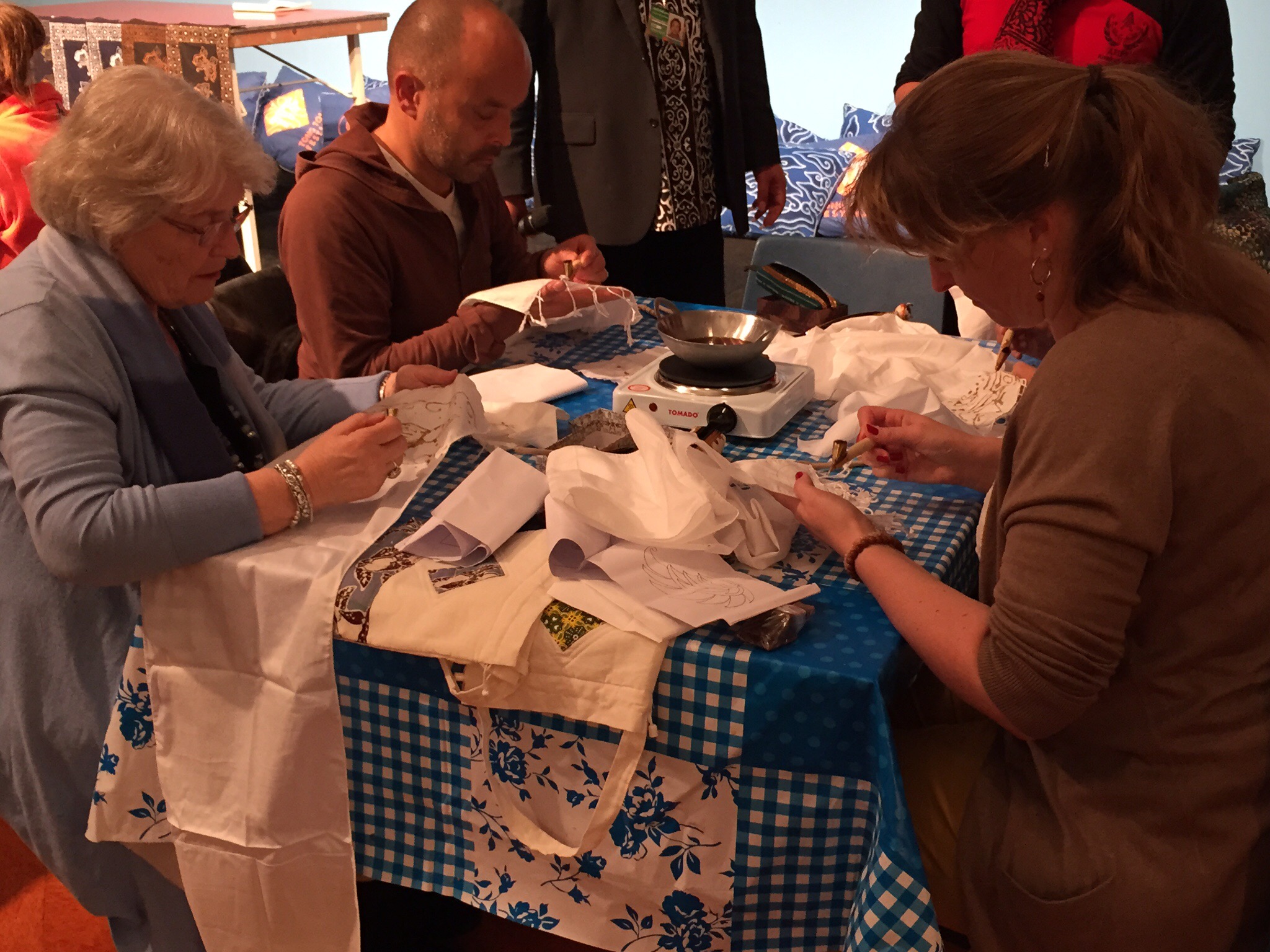
Workshop how to make Batik


INDONESIA 


Cobek's corner
Cobek’s corner


Buying
Buying “penebah” : things for cleaning bed

Malioboro's atmosphere
Malioboro’s atmosphere

.

<

p style=”text-align: justify”>

Malioboro's atmosphere
Malioboro’s atmosphere

GRAND PASAR

The phenomenal one : Akik


Orkes Keroncong Cente Manis' performance
Orkes Keroncong Cente Manis’ performance

.

FOOD

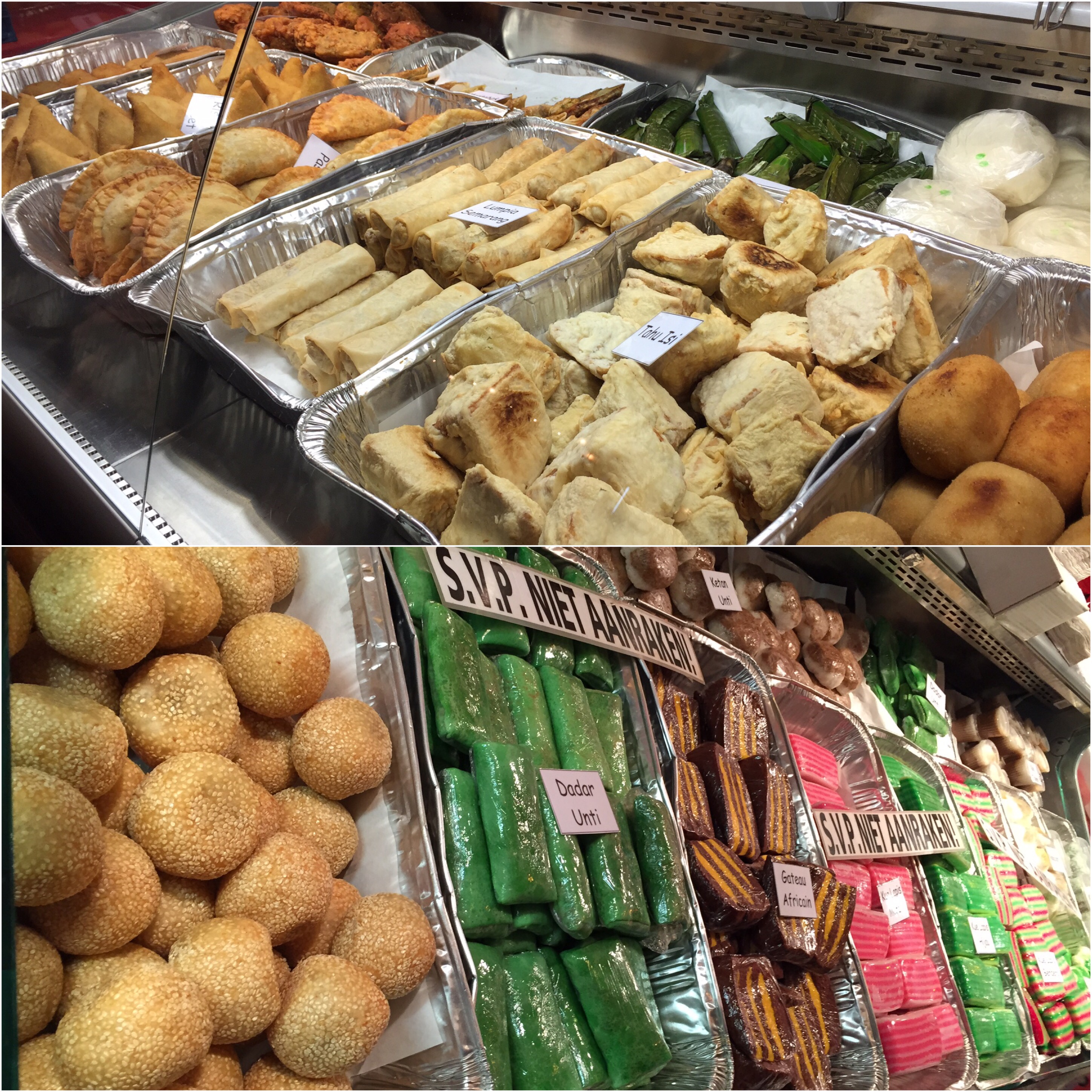
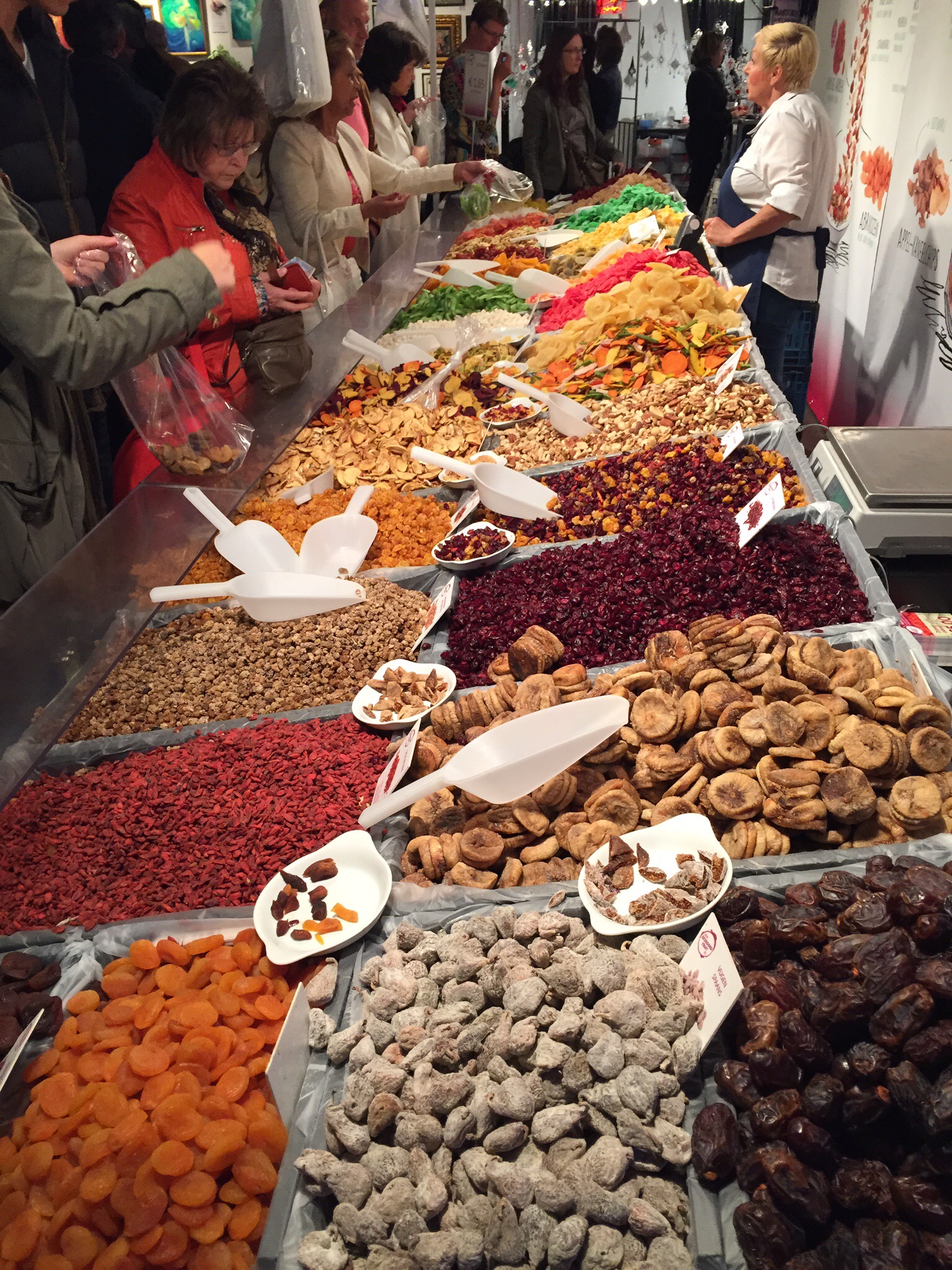
Jajanan Pasar
Jajanan Pasar

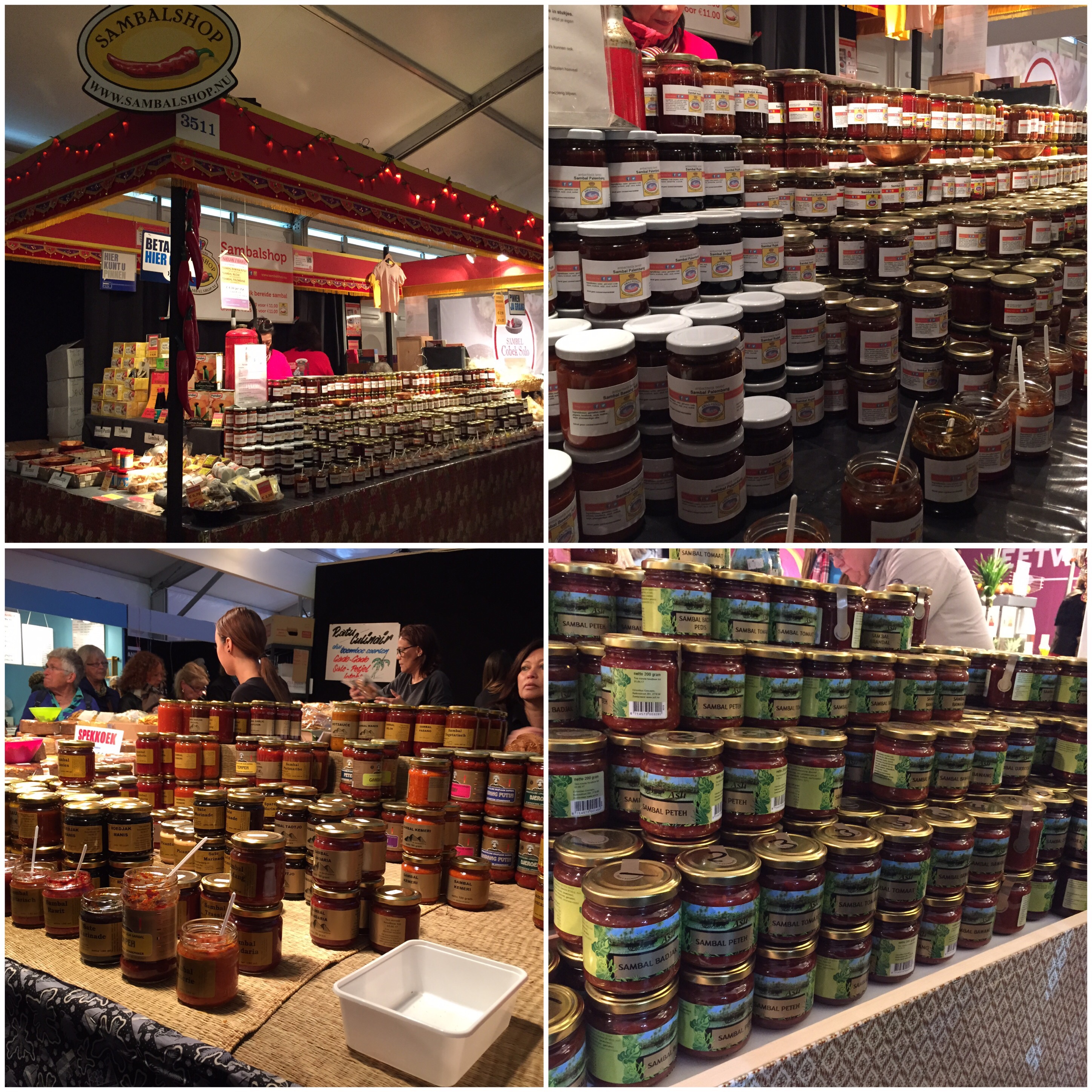
Sambal's corner
Sambal’s corner

<

p style=”text-align: justify”> 

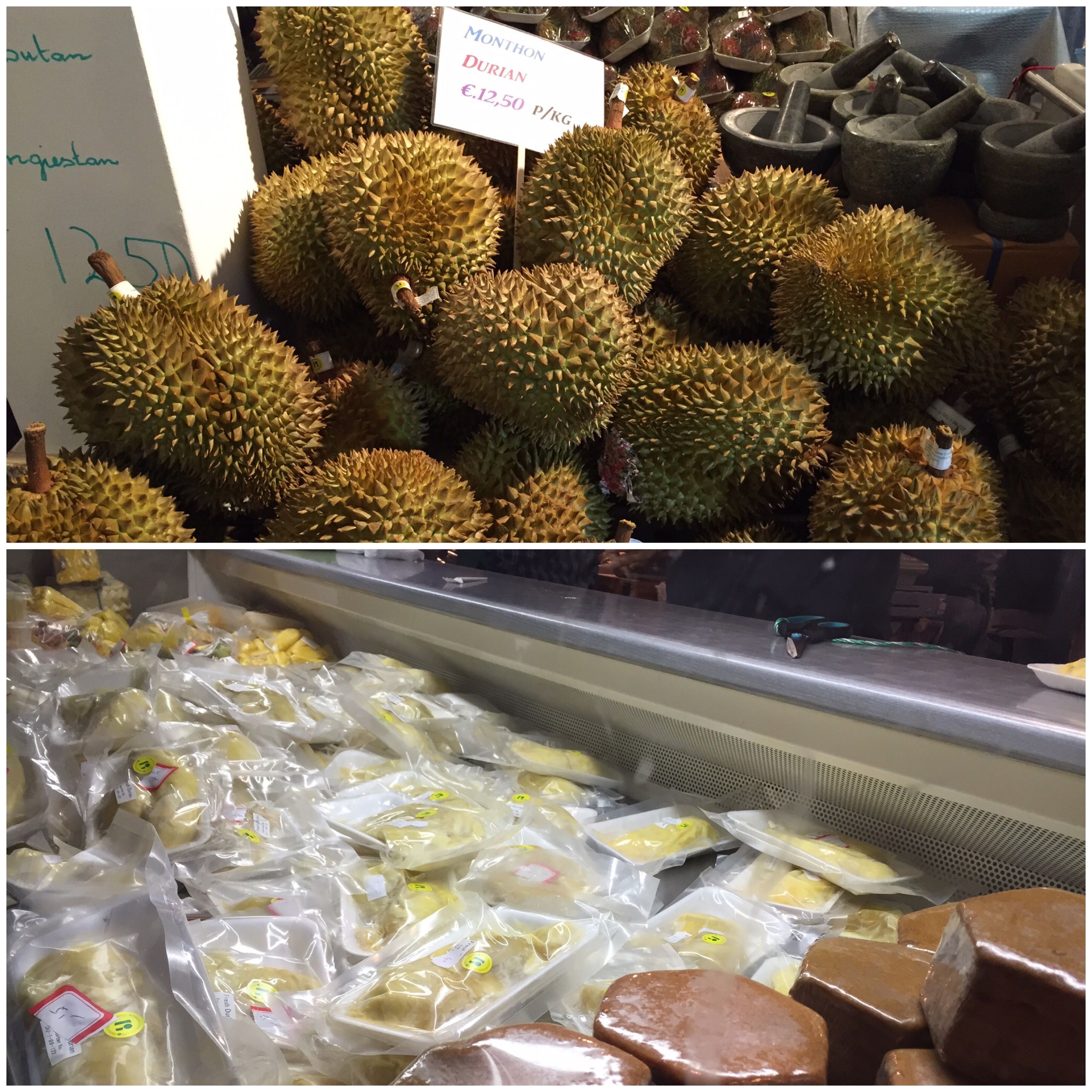
Durian
Durian


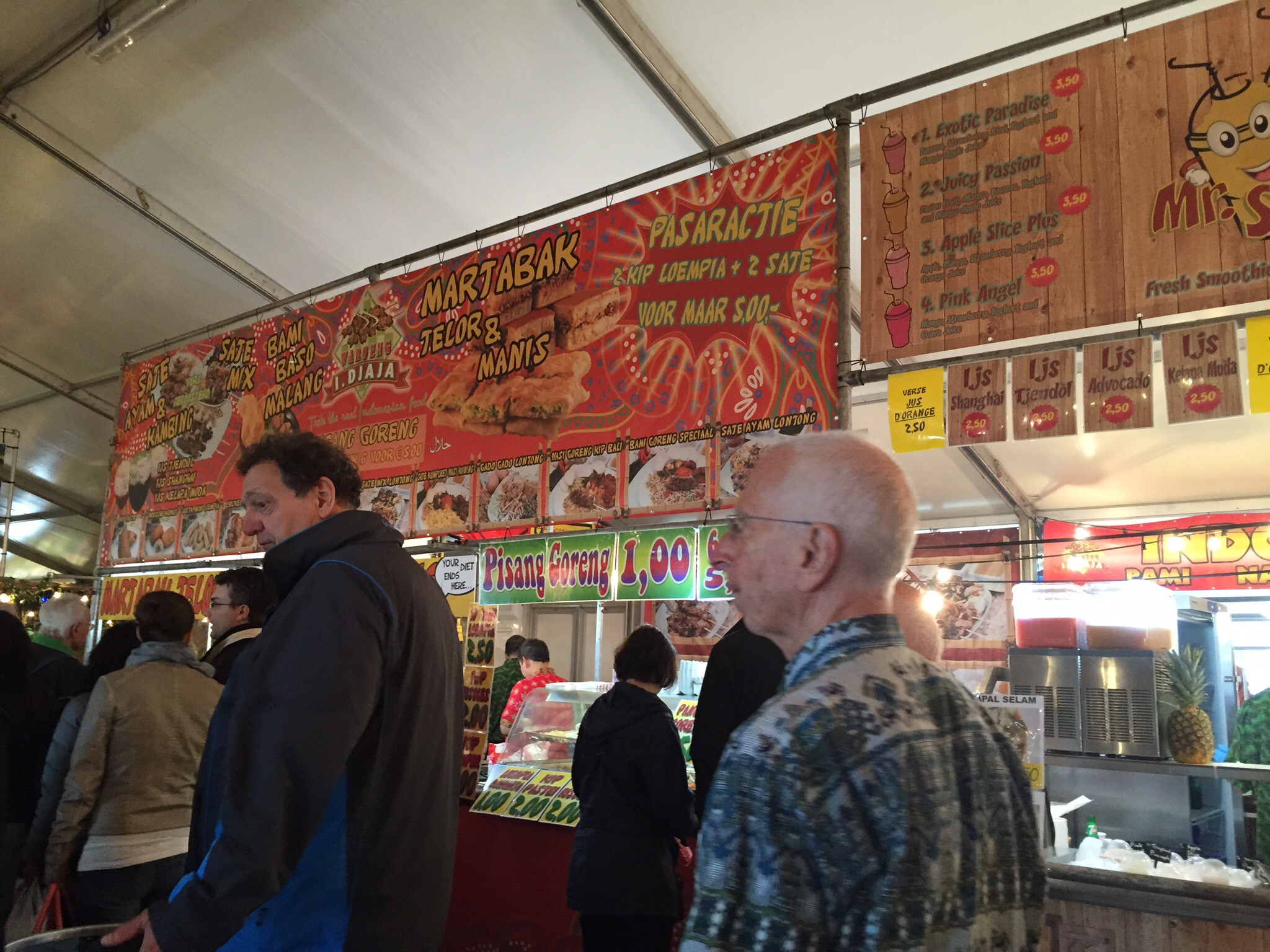
Indomie's party
Indomie’s party

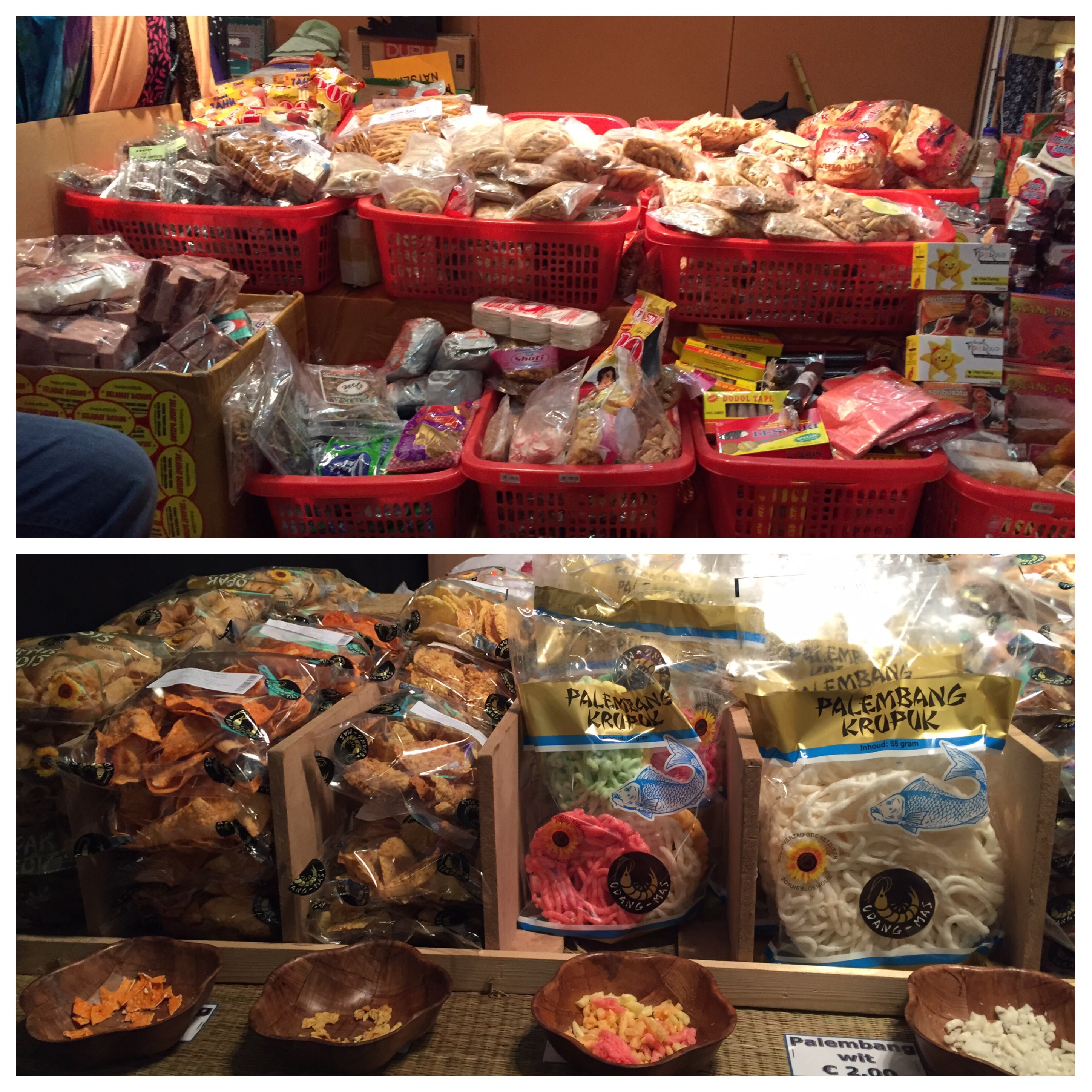
Indonesian' snack
Indonesian’ snack


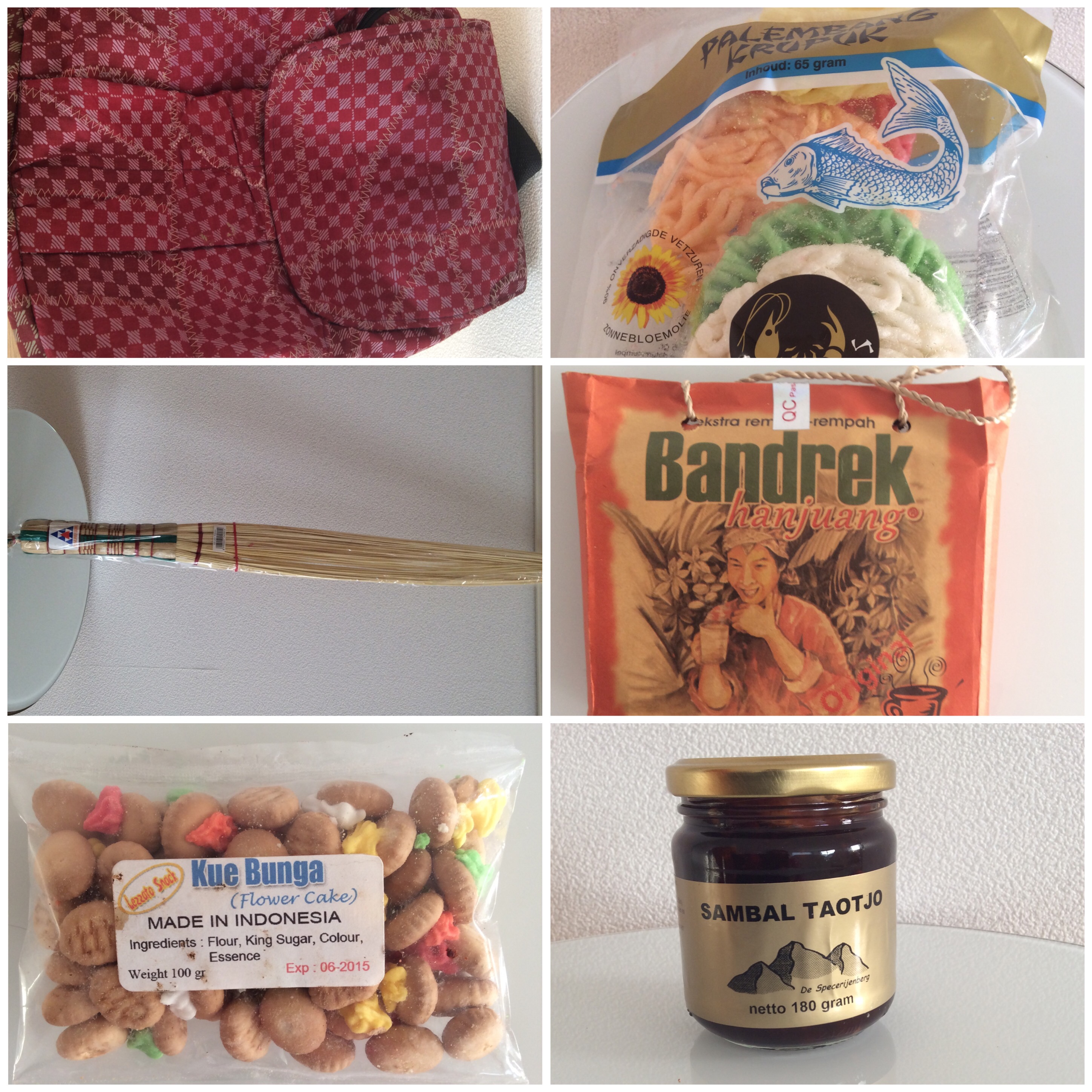
And actually we bought ….

These one
These one

Finally…

So you want to learn Dutch? You can!

Be prepared for a long and difficult journey though.

Since Adek Deny is trying to master the Dutch language she obviously comes to me with questions about how and why some things are as they are in Dutch language and grammar. As Dutch is my native language I accepted a lot of things when I learned the language over the years without explicitly thinking about the things I was taught. Frustrating for a new comer, because I have to think deeply and sometimes do not have a proper explanation  at all.

I want to show you in this post some of the difficulties that one might experience, trying to learn the Dutch language. Those difficulties are based on my own experiences with the questions from Adek Deny.

1. The Dutch have a very difficult system with conjugating verbs

Learning to use verbs correctly in sentences can be a nightmare, it is so difficult that the Dutch themselves make lots of mistakes actually. I have this example from one of the most popular and best read Dutch blogs: Geenstijl. It states “betaald” while it should say “betaalt” because they mix up the writing of a past particle with the third person singular tense (there is also an extra other bonus mistake as you can see in the picture).

betaald

All media often make grammatical errors (maybe this might give you some comfort). Through Google you can find lots of  websites that will try to give you the best explanations of the difficult matter of conjugating verbs.

2. The Dutch break have a habit of putting words in a sentence in a special order

Sometimes you think you can get away by your knowledge of the English language when creating your first sentences. Unfortunately, in some cases your knowledge of the English language is not applicable in Dutch. Have a look for example at this sentence: “I go to school tomorrow“. Knowledge of English language is not enough to make a correct Dutch sentence like “Ik ga naar school morgen” (although the Dutch will understand what you mean). The correct order would be: “Ik ga morgen naar school”. So besides that you already speak a language with news words and carefully have to think about the verbs to use, things can get extra complicated when at the same time you carefully have to consider the order in which you put the words in an sentence.

3. The Dutch break verbs apart

I never realised it myself, but there is something else strange going on with verbs. We break them apart in some circumstances. There are verbs like ‘aanzetten’ (= “to put on”) that suddenly are split when used in a sentence like ‘Ik zet de televisie aan”  (= “I put on the the television”). Actually what happens is that the verb already contains a preposition (“aan”) that will be taken away from the ‘real’ verb (“zetten”).

4. Pronunciation of the Dutch is very unlike most languages

In Netherlands we have this mocking about to how to determine someone is not originally Dutch by having her or him pronounce the word “Scheveningen” (the name of a beach village located close to Den Haag). The Dutch used that trick in Second World War to discover secret German agents and soldiers.

I started to realise that the Dutch have many more unique (vowel) sounds, like “ui” as in “huis” (=”house”), “eu” as in “keuken” (= “kitchen”), but even more standard vowel sounds like “aa” are difficult to master, because the Dutch really like to prolong  the sound, so don’t be afraid to hold the vowel and say a long “aaaaaaa” instead of a short “aa”. Trust me, it will make you sound more authentically Dutch.

5. The Dutch love to use in between and extra words

Also never realised it, but we Dutch use lots of extra words to create a sort of “cuty” effect or to make someone clear it is all not too serious (I tried to think about why we do that and I can not come up with a more satisfying explanation).

Use lots of words like “hoor” as in “Ja hoor”, “Nee hoor”, “Jammer hoor”. But there are so many other words, like “wel”, “nog”, “even”, “en zo”, “of zo” all difficult or impossible to translate in other languages. An example of a sentence using some of these words would be like: “Ik kan nog wel even doorgaan of zo” (= “I could continue like this’).

Some other tip to improve your authenticity as a Dutch speaking person: repeat some words lot. So when you leave friend or family, say “Doei doei” instead of “Doei” (=”Bye”) or say “Ja, ja” instead of “Ja” (=”Yes”).

6. De/ Het

Ok, so the Dutch have two defining articles “de” and “het” where the English only have one (=”the”). The positive side of the story is that this is one less than in German (“Der”, “Die”, “Das”), the bad news is that you must be prepared to study long time to learn what article to use in what case. There are so many ‘rules’ what to use in what instance, that it is probably easier to learn them by heart and expand your knowledge as you get more comfortable by learning Dutch.

There are more other difficulties with Dutch, so maybe one day I will expand the list later when Adek Deny comes with new questions. Be patient with your partner to teach him or her Dutch, because despite the difficulties I mentioned, you can absolutely learn Dutch and the Dutch will be very proud when you try to master their language! Mingle among the Dutch, watch television a lot or YouTube movies teaching Dutch, start with children books (like the famous “Nijntje”) and I am sure you will be doing fine learning the Dutch!